

Preventive Maintenance Process: Step-by-Step Guide to Scheduling, Workflow, and Implementation
2026-05-18
A preventive maintenance process is a structured method to plan, schedule, and track maintenance before equipment failure happens. It helps reduce downtime, improve asset life, and control maintenance costs. With Preventive Maintenance Software, businesses can automate scheduling, manage work orders, and improve maintenance efficiency.
Machines in a manufacturing plant used to break down frequently. Despite regular maintenance efforts, the same issues kept repeating.
The real problem was not effort, it was the absence of a structured preventive maintenance process and proper maintenance scheduling.
Once a structured system was implemented using digital maintenance tools, breakdowns reduced, planning improved, and operations became more stable.
Industries such as HVAC, EV charging, healthcare, power equipment , MPS depend heavily on preventive maintenance to ensure smooth and uninterrupted operations.
What Is a Preventive Maintenance Process?
A preventive maintenance process is a structured method used to maintain equipment before failures occur. It includes planning, scheduling, execution, and tracking of maintenance activities.
Why it matters
Without a defined process, maintenance becomes reactive. This leads to unplanned breakdowns, higher repair costs, and reduced productivity.
Difference from reactive maintenance
- Reactive maintenance fixes issues after breakdown
- Preventive maintenance prevents failures before they happen
Why a Preventive Maintenance Process Is Important
A structured preventive maintenance process helps businesses improve reliability and reduce operational risks.
It helps in:
- Reducing unexpected breakdowns
- Increasing equipment lifespan
- Lowering maintenance costs
- Improving uptime and productivity
Studies show that preventive maintenance can significantly reduce unplanned downtime and improve equipment reliability. (Source: World Metrics – Maintenance Statistics)
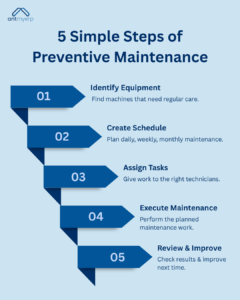
Preventive Maintenance Steps: 5 Basic Steps to Build a Program
A successful maintenance program follows structured steps of preventive maintenance.A strong maintenance system follows clear maintenance process steps
Step 1: Identify Critical Asset
Start by looking at which machines really matter for your work. Focus your maintenance on those first so problems don’t affect operations too much.
Step 2: Create a Preventive Maintenance Schedule
Make a simple plan, which needs to be checked daily, weekly, or monthly so things don’t get forgotten.
Step 3: Assign Work Orders and Technicians
Give the right tasks to the right people. When everyone knows their job, work moves faster and with less confusion.
Step 4: Execute and Track Maintenance Tasks
Do the maintenance work and keep a basic track of it. This helps you know what’s done and what’s still pending.
Step 5: Review and Improve
Check what went wrong, what got delayed, and try to improve it next time. Small changes make a big difference.
How to Create a Preventive Maintenance Schedule
Creating a proper schedule is a core part of preventive maintenance planning and scheduling.
A structured schedule includes:
- Daily maintenance schedule for basic checks
- Weekly maintenance schedule for inspections
- Monthly preventive maintenance schedule for servicing
- Annual preventive maintenance schedule for major maintenance
- Time based maintenance for usage-driven tasks
- PPM schedule for planned preventive maintenance
Organizations often use maintenance schedule Excel sheets initially, but scaling requires automation through software.
Maintenance Planning and Scheduling Best Practices
Effective maintenance planning and scheduling improves execution and reduces delays.
Best practices include:
- Prioritizing critical assets
- Using maintenance planner tools or CMMS
- Avoiding missed maintenance schedules
- Allocating resources efficiently
- Following preventive maintenance strategy
Difference Between Maintenance Planning and Scheduling
Maintenance planning defines what work needs to be done, while maintenance scheduling defines when it should be done.
Understanding this difference helps improve execution efficiency and reduces confusion in maintenance teams.
Preventive Maintenance Workflow and Process Flow
A structured maintenance workflow process ensures consistent execution of maintenance activities.
Typical workflow includes:
- Maintenance request creation
- Work order generation
- Task assignment to technicians
- Maintenance execution
- Completion and documentation
- Reporting and analysis
This workflow is supported by CMMS workflow systems that improve visibility and control.
CMMS Implementation Steps for Preventive Maintenance
A CMMS system simplifies maintenance operations and improves efficiency.
Key CMMS implementation steps include:
- Adding assets into the system
- Defining preventive maintenance schedules
- Setting alerts and notifications
- Automating work order creation
- Tracking maintenance KPIs
To manage complete service workflows, a FSM Software helps streamline operations and improve execution.
Common Challenges in Maintenance Scheduling
Many organizations struggle with maintenance scheduling due to manual and unstructured processes.
Common challenges include:
- Manual tracking errors
- Delayed work order execution
- Missed preventive maintenance tasks
- Dependency on reactive maintenance
Preventive Maintenance Across Industries
Preventive maintenance is widely used across multiple industries to ensure operational reliability and reduce unexpected breakdowns. Each industry applies it based on its equipment type and operational risks.
Photocopier / MPS Industry
In the photocopier and MPS industry, machines run continuously, so small issues can grow quickly. Regular maintenance helps avoid jams, improves print quality, and prevents breakdowns.
Print (photocopier) Industry maintenance management software reduces downtime, streamline technician operations and manage photocopier servicing.
Healthcare Industry
Regular maintenance helps keep MRI machines, ventilators, and other devices safe and reliable so there are no sudden problems. Many hospitals use Medical Equipment Maintenance Software to manage schedules and make sure everything is checked on time.
HVAC Industry
HVAC systems like air conditioners, chillers, and AHUs run continuously, so regular servicing is important to avoid unexpected failures.
Using an HVAC preventive maintenance software, helps schedule inspections, track service tasks, and ensure timely maintenance.
EV Charging Industry
In the EV charging sector, downtime directly impacts users and revenue. Preventive maintenance ensures charging stations remain functional, reduces service disruptions, and improves infrastructure reliability. Explore EV and other industry solutions.
Role of Preventive Maintenance Software
As work increases, handling maintenance manually becomes hard to manage. People try to track schedules, work orders, and equipment on sheets or calls, and things get missed sometimes.
Preventive maintenance software helps puts everything in one place like schedules, tasks, and tracking so teams don’t have to keep following up again and again. Work feels more clear and less confusing.
In real situations, every industry handles maintenance in its own way. Many teams use simple checklists, so they don’t forget tasks. At the same time, the workflow changes depending on the machines and the type of service they are doing.
Industry-specific preventive maintenance checklist and guides:
Managed IT services maintenance approach
Broadband repair and service maintenance workflows
Audio-visual equipment maintenance planning
By using simple processes and a bit of automation, AntMyERP Preventive Maintenance Software helps bring all maintenance work into one place. It reduces small mistakes, keeps things more organized, and makes day-to-day service work more reliable.
Conclusion
When you have a proper preventive maintenance process, you don’t have to keep fixing the same problems again and again. Most issues get handled early before they turn into something bigger.
With simple steps, a basic schedule, and a little automation, maintenance becomes easier to manage. Machines run better, and the team doesn’t feel as stressed.
If you want to make day-to-day work smoother, preventive maintenance software can help keep things more organized and easier to track.