
HVAC Preventive Maintenance Checklist: 21 Tasks to Improve HVAC Performance
2026-07-01
In this guide, you will learn why an HVAC preventive maintenance checklist is important, the key maintenance tasks that help keep HVAC systems working properly, common problems that regular maintenance can prevent, and simple ways to improve system performance. You will also see how maintenance software can help manage inspections, schedules, and service records more easily.
Why HVAC Preventive Maintenance Matters
Many HVAC problems begin as small issues. A clogged air filter, dirty coil, or damaged belt can make the system work harder than necessary.
Over time, these small problems can increase energy costs, reduce cooling performance, and cause unexpected breakdowns.
To understand how these issues impact real HVAC operations in different industries, you can explore the HVAC industry overview.
Regular HVAC preventive maintenance helps businesses:
- An HVAC preventive maintenance checklist is a list of maintenance tasks used to keep heating, ventilation, and air conditioning systems running. These tasks include cleaning filters, checking refrigerant levels, inspecting electrical connections, testing thermostats, and monitoring system performance.
- HVAC systems help keep offices, factories, hospitals, schools, and commercial buildings comfortable throughout the year. They provide heating, cooling, and proper airflow to create a safe indoor environment.
- Like any machine, HVAC equipment needs regular care. A dirty filter, low refrigerant level, or loose electrical connection may seem small, but these problems can lead to expensive repairs if ignored.
- An HVAC preventive maintenance checklist helps technicians inspect, clean, and maintain HVAC equipment before problems occur. Regular maintenance improves performance, reduces downtime, lowers energy costs, and helps equipment last longer.
- Reduce energy consumption
- Extend equipment life
- Improve indoor air quality
- Lower repair costs
- Reduce equipment downtime
- Improve occupant comfort
Routine maintenance is often much less expensive than emergency repairs or equipment replacement.For HVAC companies managing multiple service requests, HVAC field service management software can help streamline maintenance operations and technician scheduling.
Industry Insights:
In the research Reports from ASHRAE and the U.S. Department of Energy, it was noted that well-maintained HVAC systems can last several years longer and use up to approx. 30% less energy compared to neglected ones.
Using AntMyERP Preventive Maintenance Module businesses schedule and track preventive maintenance tasks and their technicians complete all checks on time and provide history logs for audits and compliance.
HVAC Preventive Maintenance Schedule (Time-Based Plan)
A successful HVAC preventive maintenance schedule includes monthly, quarterly, and annual inspections.
Monthly Maintenance Tasks
- Clean or replace air filters
- Inspect condensate drain lines
- Check refrigerant levels
- Clean evaporator coils
- Clean condenser coils
- Inspect belts and pulleys
- Tighten electrical connections
- Check blower and fan motors
- Test thermostat settings
- Inspect air vents and registers
Quarterly Maintenance Tasks
- Inspect heat exchangers
- Examine flue pipes
- Lubricate moving parts
- Inspect ductwork
- Check insulation condition
- Test airflow performance
- Verify safety controls
- Review maintenance records
Annual Maintenance Tasks
- Perform a full system performance audit
- Inspect major HVAC components
- Review equipment lifecycle plans
21 HVAC Preventive Maintenance Tasks (Detailed Checklist)
Monthly HVAC Maintenance Tasks
1. Clean or Replace Air Filters
Dirty filters block airflow and make the system work harder. Clean or replace them regularly to keep air flowing smoothly.
2. Inspect Condensate Drain Lines
Check drain lines for clogs, leaks, or water buildup. If blocked, they can cause water damage or mold.
3. Check Refrigerant Levels
Low refrigerants can reduce cooling and increase electricity use. Keep it at the right level for proper cooling.
4. Clean Evaporator Coils
Dirty coils reduce cooling performance. Cleaning them helps the system cool faster and better.
5. Clean Condenser Coils
Outdoor coils collect dust and dirt. Cleaning them improves overall system efficiency.
6. Inspect Belts and Pulleys
Check for cracks or wear. Replace them early to avoid sudden breakdowns.
7. Tighten Electrical Connections
Loose wires can cause safety issues or system failure. Make sure everything is tight and secure.
8. Inspect Fan and Blower Motors
Listen for strange sounds or vibration. These are early signs of motor problems.
9. Test Thermostat Settings
Make sure the temperature settings are correct and the system responds properly.
10. Inspect Air Vents and Registers
Check if airflow is blocked by dust or objects. Clear vents help air move freely.
Quarterly HVAC Maintenance Tasks
11. Inspect Heat Exchangers
Look for cracks, rust, or damage that could affect heating and safety.
12. Examine Flue Pipes
Check for leaks, rust, or blockage. Fix issues before they become serious.
13. Lubricate Moving Parts
Add lubrication to reduce friction and help parts move smoothly.
14. Inspect Ductwork
Check ducts for leaks or loose joints that reduce airflow efficiency.
15. Inspect Insulation
Replace damaged insulation to help save energy and improve performance.
16. Test Airflow Performance
Make sure air is moving evenly across all areas of the building.
17. Verify Safety Controls
Check safety switches and sensors to ensure they are working properly.
18. Review Maintenance Records
Go through past records to spot repeated problems and plan better maintenance.
Annual HVAC Maintenance Tasks
19. Perform a Full System Check
Do a complete check of heating and cooling performance to ensure everything works well.
20. Inspect Major Components
Check important parts like compressors, motors, and heat pumps for wear or damage.
21. Review Equipment Life Plan
Plan repairs, upgrades, or replacements before equipment fails.
Air Conditioner Preventive Maintenance Checklist
Air conditioning systems require regular maintenance to deliver efficient cooling.
A basic AC preventive maintenance checklist includes:
- Clean or replace air filters
- Check refrigerant levels
- Clean evaporator coils
- Clean condenser coils
- Inspect thermostat operation
- Check condensate drain lines
- Tighten electrical connections
- Inspect fan motors
- Test cooling performance
Regular AC maintenance can help reduce energy bills and improve cooling efficiency.
Benefits of Following an HVAC Maintenance Checklist
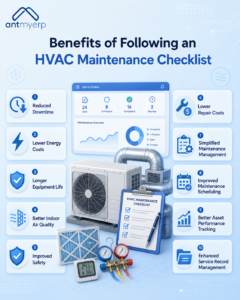
Reduced Downtime
Regular inspections help prevent unexpected equipment failures.
Lower Energy Costs
Clean and efficient systems consume less energy.
Longer Equipment Life
Preventive maintenance helps reduce wear and tear.
Better Indoor Air Quality
Clean filters and ductwork improve airflow and reduce contaminants.
Improved Safety
Routine inspections help identify electrical and mechanical issues early.
Lower Repair Costs
Fixing small problems early is usually less expensive than major repairs.
Businesses that rely on air purification and filtration systems can also benefit from field service software to manage inspections, maintenance schedules, and service records more easily.
Common HVAC Problems Preventive Maintenance Can Prevent
Poor Cooling
- Clean evaporator and condenser coils
- Check refrigerant levels
- Improve airflow
High Energy Bills
- Replace dirty filters
- Clean system components
- Improve airflow efficiency
Water Leaks
- Clean drain lines
- Inspect drain pans
Equipment Failure
- Perform routine inspections
- Replace worn components
Poor Indoor Air Quality
- Replace filters
- Clean ducts
- Remove dust buildup

HVAC Maintenance Management Best Practices
Managing HVAC maintenance becomes easier when businesses follow a structured process.
Best practices include:
- Create preventive maintenance schedules
- Use digital maintenance checklists
- Track maintenance history
- Monitor equipment performance
- Generate inspection reports
- Train technicians regularly
- Maintain compliance records
Good HVAC maintenance management helps reduce downtime and improve asset reliability. Many HVAC businesses use an HVAC scheduling app to automate technician assignments, reduce scheduling conflicts, and ensure preventive maintenance visits are completed on time.
How HVAC Preventive Maintenance Software Helps
Many companies still use spreadsheets and paper records to manage maintenance activities. This can make tracking inspections and service history difficult.HVAC companies managing annual maintenance contracts can further improve service delivery using AMC management software for the air conditioner and HVAC industry, which helps track customer contracts, service visits, and maintenance history from a single platform.
HVAC preventive maintenance software helps businesses:
- Schedule preventive maintenance automatically
- Assign work orders
- Track asset history
- Monitor maintenance activities
- Store inspection records
- Generate service reports
- Maintain compliance documentation
Companies using AntMyERP’s CMMS software can automate schedules, track completion, and generate reports. This ensures a preventive maintenance plan is always followed.
Mr. Prashanth Kumar, TechnoGreen Air Conditioning Pvt. Ltd. mentioned “We first used AntMyERP to use some of their innovative modules and automated reporting solutions. The modules are user-friendly and provide solid functionality, making it easy for the team to adapt and maximize productivity. The smooth integration of these features into our current systems greatly enhances our processes and decision-making.”
Key Takeaways
- Regular HVAC maintenance helps stop sudden breakdowns before they happen.
- Cleaning filters and coils helps the system run better and save energy.
- Checking the system often can help avoid costly repairs.
- Taking care of equipment regularly helps it last longer.
- Keeping maintenance records makes audits and tracking easier.
- A proper maintenance schedule keeps the whole system running smoothly and reliably.

Conclusion
Following an HVAC preventive maintenance checklist is one of the simplest ways to improve HVAC performance. Regular inspections, cleaning, and testing help reduce downtime, lower energy costs, improve indoor air quality, and extend equipment life.
By following a planned HVAC preventive maintenance schedule, businesses can avoid costly repairs and keep their heating and cooling systems operating throughout the year.
Book a demo today to see how AntMyERP can help you manage HVAC preventive maintenance more smoothly and keep your systems running at peak performance.