
After Sales Software for Heating, Ventilation, and Air Conditioning (HVAC) Industry
2026-07-18
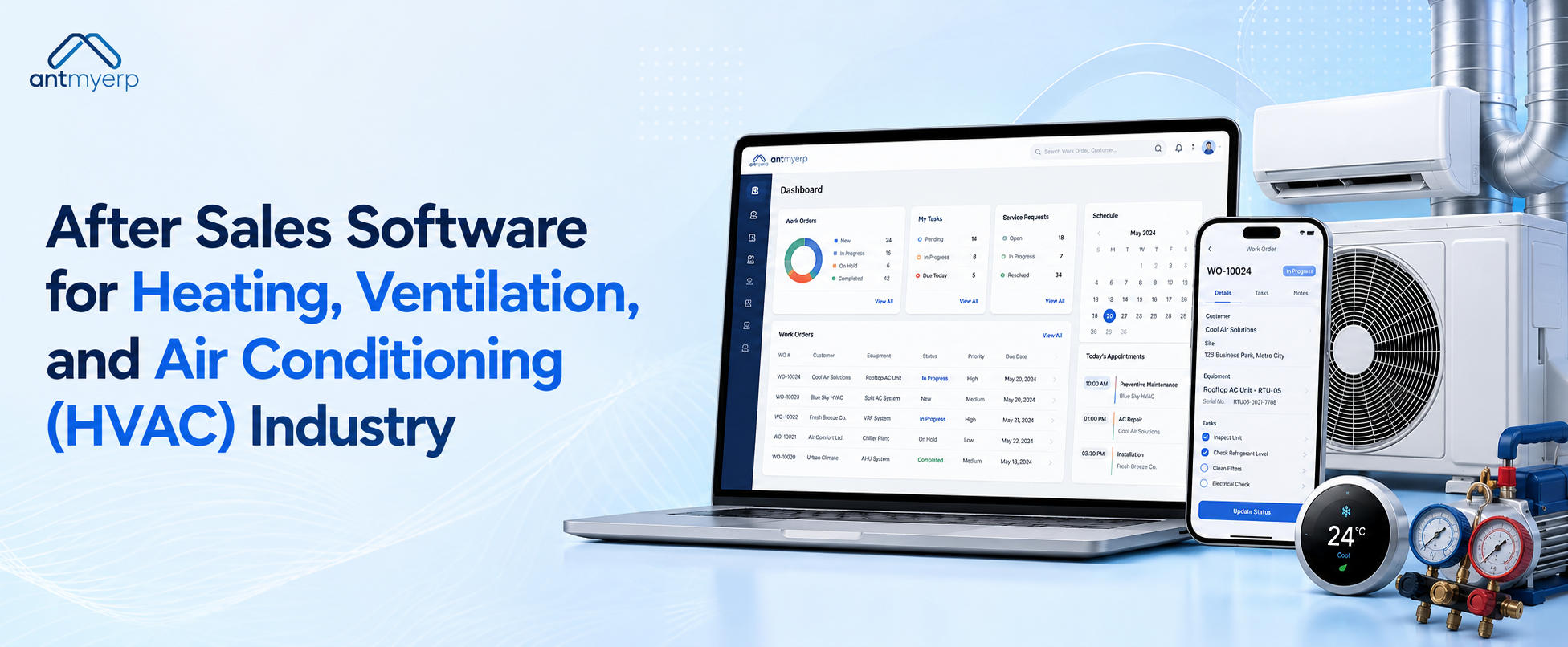
HVAC after sales software helps businesses manage service requests, technician scheduling, preventive maintenance, warranties, AMC contracts, spare parts, and complete equipment service history from a single platform. By automating day-to-day service operations and providing real-time visibility into field activities, it helps reduce equipment downtime, improve first-time fix rates, enhance customer satisfaction, and grow a more efficient HVAC service business.
Why After-Sales Service Is Becoming More Important in the HVAC Industry
Installing an HVAC system is only one part of the job. The real challenge begins after installation, when customers expect quick service, timely maintenance, and reliable support whenever an issue arises.
Whether you’re servicing residential air conditioners, commercial HVAC systems, refrigeration units, or industrial ventilation equipment, every delayed service request or missed maintenance visit can lead to equipment downtime, unhappy customers, and higher operational costs.
As HVAC businesses grow, managing service operations through spreadsheets, phone calls, or paper records becomes increasingly difficult. That’s why many companies are adopting after sales software to centralize customer service, technician management, preventive maintenance, and warranty tracking in one place.
What Is HVAC After Sales Software?
HVAC after sales software is a service management solution designed to simplify everything that happens after equipment installation.Similar to how an after sales service app helps managed print service providers streamline customer support, HVAC businesses can centralize service requests, technician management, warranties, and maintenance from a single platform.
Instead of managing customer requests manually, the software allows businesses to automate work orders, assign technicians, track warranties, schedule preventive maintenance, manage AMC contracts, and maintain complete service records from a single dashboard.
This helps service teams respond faster, stay organized, and deliver a better customer experience.
Common Service Challenges HVAC Businesses Face
Many HVAC companies face similar operational challenges as their customer base grows.
For example:
- Service requests get delayed during peak seasons.
- Technicians are assigned manually, causing scheduling conflicts.
- Preventive maintenance visits are forgotten.
- Warranty details are difficult to find.
- Spare parts are unavailable when technicians arrive on-site.
- Service history is scattered across multiple files or spreadsheets.
Over time, these small issues increase costs, reduce technician productivity, and negatively impact customer satisfaction.
How HVAC After Sales Software Solves These Challenges
Smart Technician Scheduling
Finding the right technician for the right job shouldn’t take hours.
After sales software automatically assigns service requests based on technician skills, availability, location, and workload. This reduces travel time, improves response speed, and helps technicians complete more service calls every day.When integrated with a Technician Mobile App, technicians receive work orders instantly and can begin servicing customers without delays.
Digital Work Orders with Mobile Access
Instead of carrying paperwork, technicians receive work orders directly on their mobile devices.
They can instantly view:
- Customer information
- Equipment details
- Previous service history
- Maintenance checklists
- Required spare parts
- Photos and documents
Having everything in one place helps technicians diagnose problems faster and improve first-time fix rates.
Preventive Maintenance That Works Automatically
Waiting for HVAC systems to fail is expensive.
With automated preventive maintenance scheduling, businesses can plan inspections, filter replacements, system cleaning, compressor checks, and annual servicing before problems occur.
This not only reduces unexpected breakdowns but also extends equipment life and improves system performance.Automated maintenance scheduling works even better when combined with Preventive Maintenance Software, ensuring inspections and recurring service visits are never missed.
Better Warranty and AMC Management
Managing hundreds of warranty records manually can quickly become overwhelming.
HVAC after sales software automatically tracks warranty periods, AMC contracts, renewal dates, and service eligibility, ensuring customers receive timely support while reducing administrative work. Businesses managing Annual Maintenance Contracts can also integrate AMC Management Software to automate renewals, service visits, and customer contract management.
Smarter Spare Parts Management
A technician arriving without the required spare part often means another customer visit. With inventory tracking built into the software, businesses can monitor stock availability, reserve parts for service jobs, and avoid unnecessary delays. Integrated Spare Parts Management Software ensures technicians have access to the right inventory before arriving at the customer site.
Complete Equipment Service History
Every installation, inspection, repair, replacement, and maintenance activity is stored in one centralized system.Before visiting a customer, technicians can review the complete service history, making troubleshooting quicker and more accurate.Connecting after-sales service with Asset Management Software gives technicians complete visibility into equipment lifecycle, maintenance history, and warranty records.
Automated Customer Communication
Customers appreciate knowing what’s happening with their service request.
The software automatically sends updates for appointment confirmations, technician arrival, work completion, invoices, and AMC renewal reminders, creating a smoother and more transparent service experience.
Business Benefits of HVAC After Sales Software
When service operations become organized, the entire business performs better.
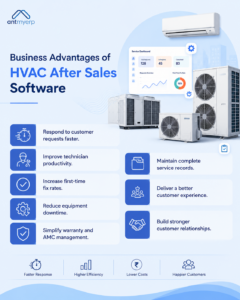
With HVAC after sales software, businesses can:
- Respond to customer requests faster.
- Improve technician productivity.
- Increase first-time fix rates.
- Reduce equipment downtime.
- Simplify warranty and AMC management.
- Maintain complete service records.
- Deliver a better customer experience.
- Build stronger customer relationships that lead to repeat business and referrals.
Delivering excellent after-sales service is about more than fixing equipment. The right service management software helps HVAC businesses stay organized, keep customers informed, and ensure every service request is handled efficiently from start to finish.
Who Should Use HVAC After Sales Software?
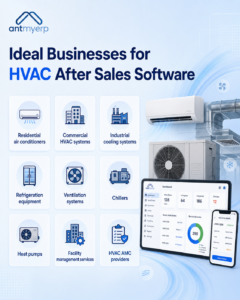
This solution is ideal for businesses that install, maintain, or service:
- Residential air conditioners
- Commercial HVAC systems
- Industrial cooling systems
- Refrigeration equipment
- Ventilation systems
- Chillers
- Heat pumps
- Facility management services
- HVAC AMC providers
Simplify Your HVAC After-Sales Service with AntMyERP
Managing HVAC service operations doesn’t have to involve multiple spreadsheets, paperwork, and endless follow-up calls.
AntMyERP brings your entire after-sales process into one centralized platform, helping you manage service requests, technician scheduling, preventive maintenance, warranties, AMC contracts, spare parts, and customer communication more efficiently.
Whether you’re handling a few service calls each day or managing hundreds of installations across multiple locations, Our HVAC Field Service Management Software gives your team the visibility and automation needed to deliver faster service, improve technician productivity, and build lasting customer relationships.
To manage installations, preventive maintenance, technician scheduling, AMC contracts, and after-sales support from one centralized platform.