

Best Field Service Software for HVAC to Save Cost
2026-07-15
If your HVAC business still depends on spreadsheets, phone calls, or WhatsApp to manage daily service jobs, you’re likely spending more time and money than necessary. HVAC field service software brings scheduling, dispatching, work orders, inventory, preventive maintenance, and invoicing into one system. This helps your team stay organized, complete more jobs, reduce operating costs, and deliver a better customer experience.
Where HVAC Businesses Lose Time and Money
Running an HVAC business isn’t just about repairing or installing air conditioners. Every day, your team has to schedule technicians, respond to emergency calls, manage spare parts, complete paperwork, and keep customers informed.
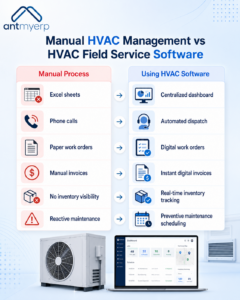
When these tasks are handled manually, small issues can quickly turn into bigger problems. A technician may be assigned to the wrong job, an important spare part may be out of stock, or a work order might get delayed. These everyday challenges often lead to extra travel, overtime, repeat visits, and unhappy customers.
As your business grows, managing everything through Excel sheets, phone calls, WhatsApp messages, or paper records becomes even harder.
With the increasing demand for air conditioning services, HVAC companies also face challenges in managing higher service volumes and customer expectations. Learn more about the rising AC demand challenges for HVAC companies and how businesses can prepare for growth.
That’s why many HVAC companies are moving to field service management software. It brings your office staff and field technicians onto one platform, making daily operations easier to manage and helping your business run more efficiently.
What Is HVAC Field Service Management Software?
HVAC Field Service Management Software helps HVAC businesses manage day-to-day service operations from one platform.
Instead of switching between different tools, your team can handle:
- Technician scheduling
- Job dispatching
- Work order management
- Preventive maintenance
- AMC management
- Inventory tracking
- Customer history
- Digital invoicing
- Mobile technician access
- Reports and business analytics
Having everything in one place makes it easier to stay organized, reduce manual work, and provide faster service.
Common HVAC Business Challenges Solved by Field Service Software
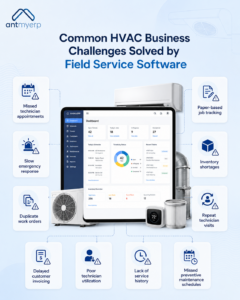
- Missed technician appointments
- Slow emergency response
- Duplicate work orders
- Paper-based job tracking
- Inventory shortages
- Repeat technician visits
- Delayed customer invoicing
- Poor technician utilization
- Lack of service history
- Missed preventive maintenance schedules
Why HVAC Businesses Are Switching to Field Service Software
As service requests increase, managing technicians, customers, and inventory manually becomes more difficult. Field service software simplifies these daily tasks so your team can spend less time coordinating work and more time serving customers.
Key Benefits of the Best HVAC Field Service Software
Schedule the Right Technician for Every Job
Good scheduling is more than filling a calendar. It’s about sending the right technician to the right customer at the right time.
HVAC scheduling software considers technician skills, availability, location, and job priority before assigning work. This helps reduce travel time and allows technicians to complete more service calls in a day.
Benefits include:
- Faster response times
- Reduced travel costs
- Better technician utilization
- More jobs completed each day
- Improved customer satisfaction
Respond Faster to Emergency Service Calls
Emergency breakdowns need immediate attention.
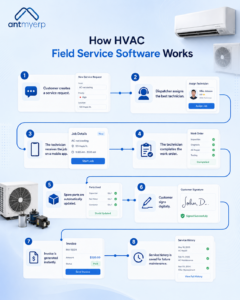
Instead of calling multiple technicians to find someone available, dispatchers can assign jobs instantly through the software. Technicians receive the job details on their mobile devices and can head directly to the customer.
This speeds up response times and keeps emergency service running smoothly.
Keep Spare Parts Available When You Need Them
Few things delay a repair more than discovering a required spare part isn’t available.
HVAC inventory management software keeps track of warehouse stock, van inventory, equipment, spare parts, and consumables in real time. Automatic stock alerts help your team reorder parts before they run out.
Better inventory control means fewer delays and fewer repeat visits.
Manage HVAC Rental Equipment Efficiently
Many HVAC businesses also rent out portable air conditioners, chillers, heaters, dehumidifiers, generators, or other equipment. Tracking rented assets manually can lead to missed returns, double bookings, and lost revenue.
HVAC rental management software helps businesses manage rental equipment by tracking asset availability, rental periods, maintenance schedules, customer contracts, and equipment locations from one platform. This improves equipment utilization, reduces downtime, and ensures rental assets are ready for the next customer.
The software also helps HVAC rental businesses track equipment availability, manage rental contracts, monitor maintenance schedules, and improve asset utilization, reducing downtime and maximizing rental revenue.
Reduce Breakdowns with Preventive Maintenance
Waiting until equipment fails is expensive for both your business and your customers. Preventive maintenance software automatically schedules routine service visits and sends reminders when maintenance is due. Regular servicing helps identify small issues before they become major repairs. Over time, businesses can reduce downtime, extend equipment life, and build stronger customer relationships.
Following a proper HVAC preventive maintenance checklist helps technicians complete routine inspections and improve equipment performance.
Give Technicians Everything They Need on Their Mobile Device
Field technicians shouldn’t have to call the office every time they need information.
Using the Field Service mobile app, they can:
- View work orders
- Access customer history
- Upload site photos
- Capture digital signatures
- Update job status
- Generate invoices
With everything available in one place, technicians spend less time on paperwork and more time completing jobs.
Keep Every Work Order Organized
Managing work orders manually can make it difficult to track job progress. Work order software keeps every service request in one place, making it easy to monitor job status, assigned technicians, parts used, time spent, and customer approvals.
This gives managers better visibility into daily operations and helps prevent missed updates.
Invoice Customers Before Leaving the Site
Many HVAC businesses still prepare invoices after technicians return to the office.Digital invoicing allows technicians to create and send invoices immediately after completing a job. This helps reduce billing delays, improve cash flow, and minimize paperwork.
Deliver a Better Customer Experience
Customers value quick service and clear communication.
HVAC service management software keeps them informed with appointment reminders, technician arrival updates, digital service reports, and maintenance notifications.
Keeping customers informed throughout the service process builds trust and encourages repeat business.
How HVAC Field Service Software Helps Reduce Costs
Reducing costs doesn’t always require major changes. Often, it’s the small improvements in daily operations that make the biggest difference.
Field service software helps businesses lower operating costs by reducing technician travel, minimizing paperwork, preventing inventory shortages, improving first-time fix rates, and reducing unnecessary overtime. It also speeds up invoicing and automates many routine administrative tasks.
Over time, these improvements help increase productivity, improve profitability, and support long-term business growth.
Features to Look for in the Best HVAC Field Service Software
When comparing different HVAC software solutions, look for features such as:
- Technician scheduling
- Smart dispatching
- Work order management
- Preventive maintenance
- AMC management
- Inventory management
- CRM
- Mobile technician app
- GPS tracking
- Digital invoicing
- Reports and analytics
- Multi-user access
- Integration with accounting software
- Customer portal
- Cloud-based access
Choosing software with these features ensures your business can scale as it grows.Many businesses also look for additional capabilities like HVAC warranty management systems to track warranty periods, claims, and service obligations more efficiently.
Core Modules of HVAC Field Service Software
- Technician Scheduling
- Job Dispatching
- Work Order Management
- Preventive Maintenance
- AMC Management
- Inventory Management
- CRM
- Mobile Field App
- GPS Tracking
- Digital Invoicing
- Reports and Analytics
- Customer Portal
Who Should Use HVAC Field Service Software?
HVAC software is ideal for:
- HVAC installation companies
- HVAC maintenance providers
- HVAC rental and service providers
- HVAC repair businesses
- Commercial HVAC contractors
- Residential HVAC companies
- Refrigeration service providers
- Mechanical contractors
- AMC service providers
Regardless of company size, digital field service management improves efficiency and profitability.
Explore the reasons to invest in HVAC field service management software to understand how digital tools improve productivity, customer service, and business growth.
Why AntMyERP for HVAC Businesses?
AntMyERP helps HVAC companies manage their entire service lifecycle on a single platform.
With Us, businesses can:
- Schedule technicians quickly
- Manage work orders
- Track preventive maintenance contracts
- Monitor inventory
- Generate digital invoices
- Improve customer communication
- Manage AMC contracts
- Track service history
- Access mobile apps for technicians
- Monitor business performance through reports
This enables HVAC companies to deliver faster service while reducing operational costs.
Conclusion
The HVAC industry is becoming more competitive, and managing operations manually is no longer sustainable. Investing in the best field service software for HVAC helps businesses streamline scheduling, optimize technician productivity, improve inventory control, automate billing, and deliver exceptional customer service.
Whether you’re a growing HVAC contractor or an established service company, adopting the right HVAC field service management software can reduce operational costs, increase profitability, and prepare your business for long-term growth.