
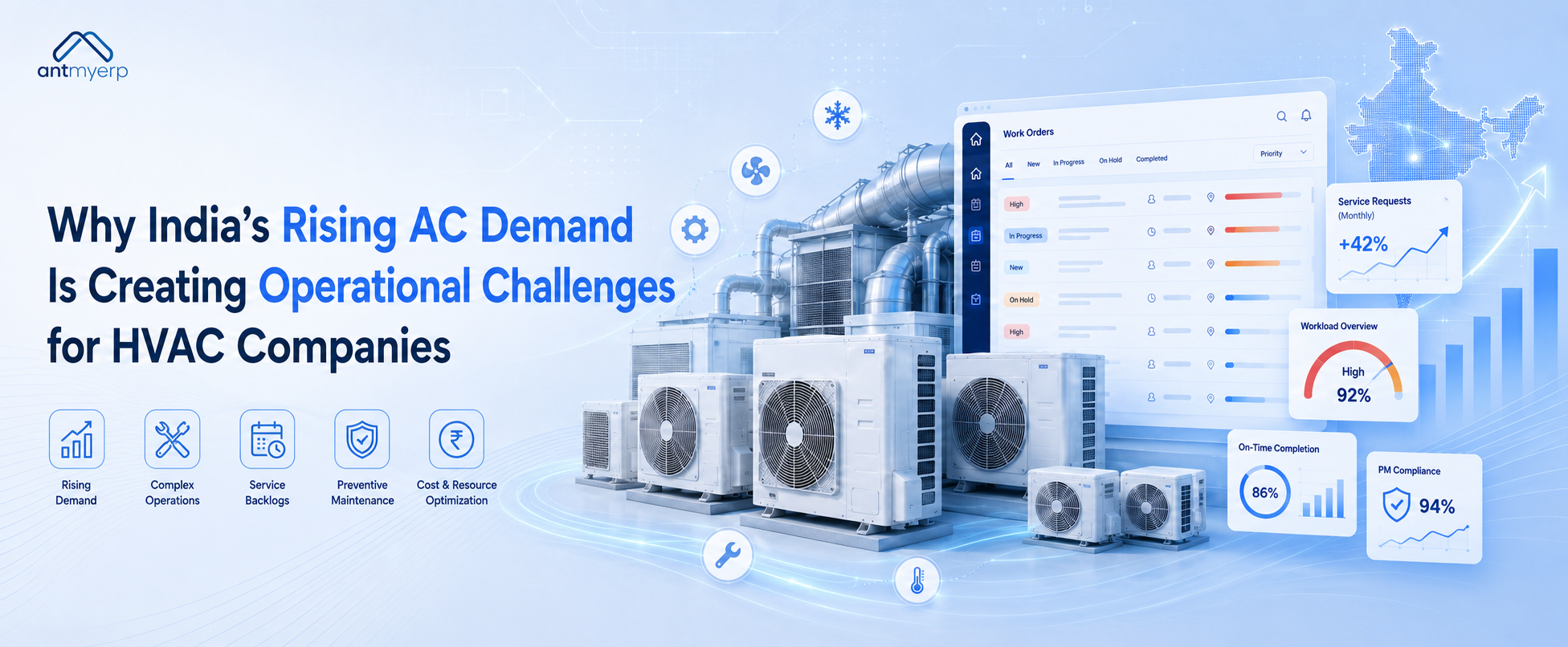
Why India’s Rising AC Demand Is Creating Operational Challenges for HVAC Companies
2026-07-03
India is seeing a big increase in air conditioner (AC) demand because of hotter weather, growing cities, and higher incomes. While this helps HVAC companies get more customers, it also creates challenges like installation delays, technician shortages, and more service requests. To keep up with demand and provide better customer service, many HVAC companies use AC Field Service Management Software to schedule jobs, track work orders, manage maintenance, and improve daily operations.
India’s Growing Demand for Cooling Systems and AC Field Service Management Software
India’s demand for cooling systems is growing quickly. According to IMARC Group, the Indian air conditioning market was valued at USD 6.15 billion in 2025 and is expected to reach USD 21.59 billion by 2034.
The overall HVAC market is also expanding. As per IMARC HVAC Market Report, It was valued at USD 13.56 billion in 2025 and is projected to grow to USD 49.02 billion by 2034.
As more homes, offices, hospitals, schools, and commercial buildings install air conditioners, HVAC companies must handle more installations, maintenance visits, and service requests. This makes technician scheduling, work order management, and customer service more challenging.
What Is Driving AC Demand in India and Why AC Field Service Management Software Is Needed
India’s air conditioner market is expanding due to several factors, including:
- Rising average temperatures and recurring heatwaves
- Increasing urbanization
- Expansion of residential and commercial infrastructure
- Higher consumer purchasing power
- Growing demand from Tier 2 and Tier 3 cities
As cooling becomes essential for homes, offices, healthcare facilities, educational institutions, and retail spaces, HVAC companies are experiencing a significant increase in both sales inquiries and service requests.
As service demand grows, many HVAC businesses are adopting AC Field Service Management Software to improve technician scheduling, work order tracking, preventive maintenance management, and customer service operations.
Why Higher AC Sales Do Not Always Translate Into Operational Efficiency
An increase in AC sales creates additional responsibilities beyond installation. Each new customer typically generates future requirements such as:
- Equipment installation
- Warranty support
- Preventive maintenance
- Emergency repairs
- Annual maintenance contracts (AMCs)
- Spare parts management
As customer bases grow, HVAC companies must manage larger service networks while maintaining response times and service quality.This creates pressure on sales, operations, and field service teams.
The Top Operational Challenges Facing HVAC Companies
1. Installation Bottlenecks
Installation demand often peaks during summer months. Many HVAC companies struggle to coordinate:
- Technician availability
- Equipment delivery
- Spare parts inventory
- Customer schedules
- Geographic service coverage
As installation volumes increase, scheduling complexity grows significantly.
2. Technician Capacity Constraints
The availability of trained HVAC technicians remains a common industry challenge.During peak seasons, service demand frequently exceeds workforce capacity.
Common outcomes include:
- Longer installation wait times
- Delayed repair visits
- Increased overtime costs
- Reduced technician productivity
3. Service Backlogs
As the installed base grows, so does the number of service requests.
Without efficient scheduling systems, businesses may experience:
- Open work order accumulation
- Missed appointments
- Delayed customer responses
- Reduced service quality
4. Preventive Maintenance Management
Preventive maintenance helps reduce breakdowns and improve equipment performance.
However, manually tracking thousands of maintenance schedules becomes increasingly difficult as businesses scale.
Missed maintenance visits can result in:
- Higher repair costs
- Increased equipment downtime
- Lower customer satisfaction
To manage these challenges effectively, HVAC companies can use AMC management software for air conditioner and HVAC industry to automate maintenance scheduling, track service contracts, and ensure timely preventive maintenance visits.
How Rising AC Demand Impacts Customer Experience
Customers typically evaluate HVAC providers based on:
- Installation speed
- Service response time
- Communication quality
- Technician professionalism
- Issue resolution speed
When demand exceeds operational capacity, customer experience often suffers.
Common customer complaints include:
- Delayed installations
- Missed service appointments
- Slow repair response
- Poor communication
- Lack of service updates
For HVAC businesses, operational efficiency has become a critical factor in customer retention.
What Is AC Field Service Management Software and how it works?
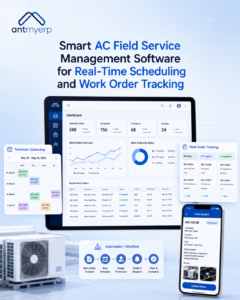
AC field service management software gives HVAC companies better control over their daily operations. It helps teams schedule jobs, manage technicians, track service activities, and stay on top of customer requests, making it easier to deliver timely and reliable service.
Typical capabilities include:
- Service scheduling
- Technician dispatching
- Work order management
- AMC management
- Customer database management
- Asset tracking
- Inventory management
- Mobile field service applications
The goal is to improve operational visibility and reduce manual administrative work.
How AntMyERP’s AC Field Service Management Software Helps Manage Rising Demand
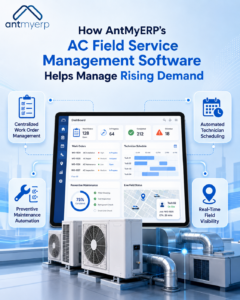
Centralized Work Order Management
All service requests are managed in one place. It helps you track jobs from start to finish and avoid missing or repeating any work.
Automated Technician Scheduling
Technicians are assigned automatically based on:
- Availability
- Location
- Skills
- Job priority
This saves time and reduces scheduling mistakes.
Preventive Maintenance Automation
Maintenance work is scheduled automatically.This helps reduce breakdowns and keeps machines working smoothly.
Real-Time Field Visibility
Managers can see everything in real time like:
- Job status
- Technician location
- Work progress
This helps in better planning and faster decisions.
Industry Shift: Reactive to Proactive Service Using AC Field Service Management Software
Historically, many HVAC businesses operated using a reactive service model. Customers reported problems, and technicians responded when available. As customer expectations increase and equipment fleets grow, proactive service models are becoming more common.
Characteristics of proactive HVAC service include:
- Scheduled maintenance programs
- Automated service reminders
- Digital work order tracking
- Service performance monitoring
- Asset lifecycle management
This shift helps reduce downtime while improving customer satisfaction.
Key Takeaways on AC Field Service Management Software for HVAC Growth
- Rising temperatures, urbanization, and increasing disposable incomes are driving air conditioner adoption across India.
- Growing AC sales are creating installation, maintenance, and field service management challenges for HVAC businesses.
- Technician shortages and seasonal demand spikes often lead to installation delays and service backlogs.
- HVAC companies need better scheduling, work order management, and preventive maintenance processes to maintain service quality.
- AC Field Service Management Software improves efficiency and scalability
Conclusion
India’s growing demand for air conditioners is creating new opportunities for HVAC companies. But as customer numbers increase, things also become more difficult to manage, like installations, service requests, maintenance visits, and technician scheduling.
To handle this growing workload, HVAC businesses need simple and efficient ways to manage their day-to-day operations. With preventive maintenance programs and HVAC field service management software, companies can stay better organized, improve service quality, and give customers a smoother and faster service experience.