
Preventive Maintenance Checklist for Security and Alarm Industry
2026-06-01
Security and alarm systems are really important for protecting buildings, equipment, staff and also sensitive areas. But still in many companies problems keep coming like alarm not working properly, false alerts happening again and again, CCTV going down sometimes, access control issues and also delay in inspections because maintenance is not done properly or on time. A preventive maintenance checklist for the security and alarm industry basically helps companies to check systems on a regular basis and avoid sudden failures. It also help in improving safety compliance and keeps CCTV, alarms and other security systems working in normal condition most of the time. Maintenance team can track inspection work, plan service visits and manage security assets in better way (without too much confusion).
Now many companies also started using preventive maintenance software for automating inspection schedules, tracking service history, managing field technicians and improving response time. It reduces manual follow-ups and helps teams not to miss important maintenance work.
Why Preventive Maintenance Matters in the Security and Alarm Industry
Security systems work continuously every day. Even a small issue in an alarm panel, access control device, CCTV camera, or intrusion detection system can create major security risks.
Many businesses only fix systems after failures happen. This reactive approach often causes:
- False alarms
- CCTV recording failures
- Access control downtime
- Sensor malfunction
- Delayed emergency response
- Compliance issues
- Higher repair costs
- Unplanned security gaps
Preventive maintenance for the Security and Alarm Industry helps reduce these risks before they become serious problems.According to the U.S. Department of Energy (FEMP), preventive maintenance helps improve system reliability, reduce unexpected equipment failures, and enhance operational efficiency in critical systems.
Benefits of Preventive Maintenance
Regular inspections improve:
- Security system reliability
- Equipment lifespan
- Alarm response efficiency
- Safety compliance
- Monitoring accuracy
- Operational visibility
This is why commercial facilities, warehouses, hospitals, factories, retail stores, banks, and IT buildings follow structured security system maintenance checklists.
What is a Security System Maintenance Checklist?
A security system maintenance checklist is a structured inspection process used to verify that all security equipment works correctly.
Systems Commonly Inspected
It helps teams inspect:
- Alarm systems
- CCTV cameras
- Fire alarms
- Intrusion detection systems
- Access control systems
- Motion sensors
- Emergency alarms
- Security panels
- Backup power systems
The checklist ensures every device is tested regularly and maintenance records are documented properly.
Preventive Maintenance Checklist for Security and Alarm Systems
1. Alarm System Inspection
Alarm systems should be inspected regularly to ensure proper communication and response.
Alarm System Checklist
- Test alarm triggering
- Verify siren functionality
- Check alarm panel status
- Inspect wiring connections
- Test communication modules
- Verify backup battery condition
- Check signal transmission
- Inspect keypad functionality
- Review alarm event logs
- Test remote monitoring connection
Poor alarm maintenance can lead to delayed alerts and false alarms.
2. CCTV Maintenance Checklist
CCTV systems need regular monitoring because camera issues often go unnoticed in daily use and are only discovered when footage is actually needed.
CCTV Inspection Checklist
- Clean camera lenses
- Check recording quality
- Verify storage capacity
- Inspect camera alignment
- Test night vision functionality
- Verify network connectivity
- Check video playback
- Inspect power supply
- Confirm timestamp accuracy
- Review camera coverage areas
3. Access Control Maintenance Checklist
Access control systems help restrict unauthorized entry into secure areas.
Access Control Checklist
- Test card readers
- Verify door lock functionality
- Inspect access permissions
- Check biometric devices
- Test emergency exit systems
- Verify server connectivity
- Review user access logs
- Check battery backup systems
- Inspect wiring and controllers
- Validate software updates
Regular access control inspections reduce security vulnerabilities.
4. Intrusion Detection System Maintenance
Intrusion detection systems help spot unauthorized access attempts, but small faults or misconfigurations can sometimes reduce their accuracy if they are not checked regularly.
Intrusion Detection Checklist
- Test motion detectors
- Inspect infrared sensors
- Verify glass break sensors
- Check door contact sensors
- Test alarm response timing
- Inspect communication pathways
- Verify detector calibration
- Check wireless signal strength
- Review detection logs
- Validate monitoring system integration
Proper intrusion detection maintenance improves overall facility protection.
5. Fire Alarm Preventive Maintenance Checklist
Fire alarm systems are critical for life safety and compliance.
Fire Alarm Maintenance Checklist
- Test smoke detectors
- Inspect heat detectors
- Verify manual pull stations
- Test alarm notification devices
- Inspect control panels
- Check backup batteries
- Verify emergency communication systems
- Test sprinkler monitoring
- Review fault indicators
- Validate compliance documentation
Routine fire alarm preventive maintenance helps businesses meet safety regulations.
Common Security System Maintenance Challenges
Many businesses still manage security maintenance manually using spreadsheets or paper records. This creates operational problems such as:
Missed Inspection Schedules
Teams forget periodic inspections due to manual tracking.
Poor Visibility
Managers cannot easily see which devices are under maintenance.
Delayed Repairs
Service requests may remain pending without proper ticket management.
Incomplete Maintenance Records
Audit and compliance documentation becomes difficult.
Technician Coordination Issues
Field teams struggle to manage multiple service locations efficiently.
Higher Downtime
Small issues become major failures when inspections are delayed.
To avoid the above problem, preventive maintenance checklists for the security and alarm industry should be followed.
How Preventive Maintenance Software Helps Security Companies
Modern preventive maintenance software helps businesses automate security maintenance operations.
Key Benefits of Preventive Maintenance Software
It helps organizations:
- Schedule recurring inspections
- Track service history
- Manage field technicians
- Monitor alarm system health
- Generate maintenance reports
- Reduce equipment downtime
- Improve SLA performance
- Manage work orders
- Track spare parts inventory
- Automate preventive maintenance reminders
Security companies also use maintenance software to improve operational visibility across multiple customer locations.
Features to Look for in Security Maintenance Software
Automated Maintenance Scheduling
Automatically create recurring maintenance tasks.
Work Order Management
Assign and track maintenance activities efficiently.
Mobile Technician Access
Allow field teams to update service records on mobile.
Asset Tracking
Monitor CCTV cameras, alarms, access control devices, and other security assets with asset tracking software.
Service Ticket Management
Manage customer complaints and repair requests.
Maintenance Reporting
Generate inspection reports and audit records.
SLA Monitoring
Track service response performance.
Inventory Management
Manage spare parts and replacement components.
Industries That Require Security System Preventive Maintenance
Preventive maintenance is important across many industries including:
- Commercial buildings
- Hospitals
- Data centers
- Retail stores
- Manufacturing plants
- Warehouses
- Airports
- Banks and financial institutions
- IT and telecom infrastructure
These industries depend on continuous security monitoring and reliable alarm systems.
Also Read Preventive Maintenance Checklist for Managed IT Services Industry
Best Practices for Security Equipment Preventive Maintenance
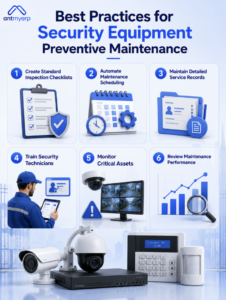
Create Standard Inspection Checklists
It’s better to have same kind of inspection checklist across all locations, so nothing gets missed and teams don’t follow different methods.
Automate Maintenance Scheduling
Try to avoid manual tracking because sometimes inspections get skipped. Preventive maintenance software helps in scheduling and reminders.
Maintain Detailed Service Records
Keep proper record of every inspection, repair work and replacement. Later it helps in understanding what keeps failing again and again.
Train Security Technicians
Technicians should know the correct process, otherwise maintenance quality keeps changing from person to person.
Monitor Critical Assets
All equipment is not the same, so high-risk security systems should get more attention and priority checks.
Review Maintenance Performance
It’s important to check patterns like repeated failures or downtime, because that shows where the actual problem is coming from.
How AI and Smart Monitoring Are Changing Security Maintenance
Many businesses now use AI-powered monitoring systems to improve preventive maintenance.
How AI Helps Security Maintenance
AI helps:
- Detect abnormal device behavior
- Predict equipment failures
- Monitor CCTV performance automatically
- Identify network issues early
- Improve alarm response accuracy
- Reduce manual inspection workload
Smart maintenance systems improve operational efficiency and reduce unexpected failures.
Why Businesses Are Moving Toward Preventive Maintenance
Reactive maintenance increases operational risk in the security and alarm industry.
Benefits of Moving from Reactive to Preventive Maintenance
Businesses are shifting toward preventive maintenance because it helps:
- Reduce emergency repairs
- Improve security reliability
- Increase system uptime
- Improve customer trust
- Lower long-term maintenance costs
- Improve compliance readiness
- Streamline technician operations
Preventive maintenance also helps organizations scale security operations more efficiently across multiple sites.
Conclusion
Security systems are there to protect people, assets and daily business operations. But when regular maintenance is not done properly, problems start coming. CCTV cameras may stop working sometimes, alarm systems can fail, fire alarms also don’t respond the way expected, or access control devices just go down without any warning. It happens in real sites, not only in theory.
A preventive maintenance checklist for the security and alarm industry helps companies keep systems more stable. It improves reliability, reduces downtime issues, helps with compliance requirements and also gives better visibility into what is actually happening in the field.
As security setups are getting more complex now, many organizations are also shifting towards preventive maintenance software to automate inspection work, track service activities and manage field teams in a more organized way.