
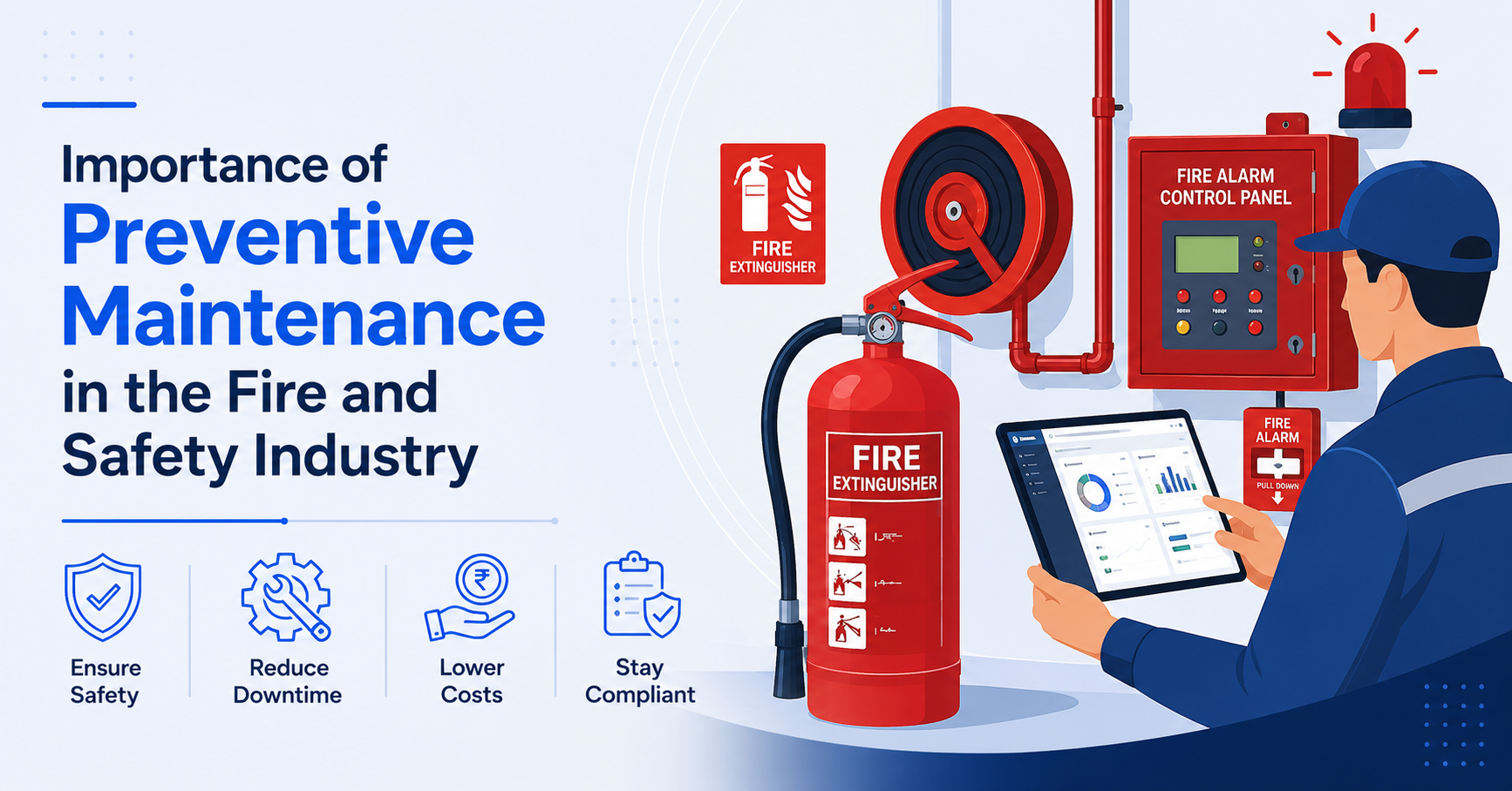
Importance of Preventive Maintenance in the Fire and Safety Industry in 2026
2026-06-19
Preventive maintenance in the fire and safety industry helps keep equipment ready for emergencies. It reduces breakdowns, helps follow safety rules, and improves customer satisfaction.
Using preventive maintenance software and mobile apps makes inspections, service scheduling, and reporting much easier and faster.
Why Preventive Maintenance Matters in Fire and Safety
Imagine a fire alarm that does not work during a fire, or a fire extinguisher that has not been checked for a long time. In the fire and safety industry, this can be very dangerous and can put people and property at risk.
Preventive maintenance means checking, testing, and servicing fire and safety equipment regularly before any problem happens. Instead of waiting for something to break, companies fix small problems early so the equipment always works when it is needed.
What is Preventive Maintenance in Fire and Safety?
Preventive maintenance in fire and safety is a scheduled process of inspecting, testing, and servicing equipment at regular intervals to ensure reliability, safety compliance, and emergency readiness, in line with industry standards such as NFPA guidelines.
Common equipment covered under preventive maintenance includes:
- Fire extinguishers
- Fire alarm systems
- Smoke detectors
- Sprinkler systems
- Emergency lighting
- Fire pumps
- Safety signage
- Emergency exit systems
The goal is simple: prevent failures before they happen.
Benefits of Preventive Maintenance for Fire and Safety Equipment
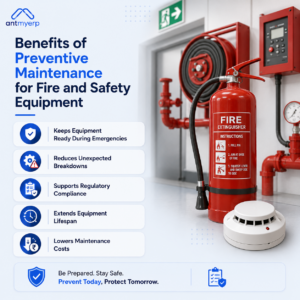
1. Keeps Equipment Ready During Emergencies
When a fire emergency occurs, every second matters.
Regular inspections ensure fire alarms, extinguishers, and other safety equipment work properly when they are needed most.
2. Reduces Unexpected Breakdowns
Small issues can quickly become expensive failures if they are ignored.
Routine maintenance helps technicians identify worn-out components, damaged wiring, low pressure levels, or system faults before they cause downtime.
3. Supports Regulatory Compliance
Fire safety equipment must meet local regulations and industry standards.
Regular maintenance helps organizations:
- Pass safety audits
- Maintain inspection records
- Avoid penalties
- Demonstrate compliance
4. Extends Equipment Lifespan
Replacing fire and safety equipment can be expensive.
Regular servicing keeps equipment in good condition and helps maximize its useful life.
5. Lowers Maintenance Costs
Preventive maintenance is usually less expensive than emergency repairs.
Fixing small issues early often prevents costly equipment failures later.
Common Preventive Maintenance Activities in Fire and Safety Sector
A preventive maintenance program may include:
- Equipment inspections
- Functional testing
- Battery replacement
- Sensor calibration
- Pressure checks
- Cleaning and lubrication
- Component replacement
- Compliance documentation
These activities help ensure fire and safety systems remain reliable throughout the year.
Why Service and Repair Maintenance is Also Important
Even with preventive maintenance, equipment can occasionally develop faults.
Service and repair maintenance helps organizations:
- Restore equipment quickly
- Minimize downtime
- Improve system reliability
- Reduce operational risks
A well-managed maintenance program combines both preventive maintenance and repair activities.Service and repair maintenance software helps organizations restore equipment quickly, minimize downtime, improve system reliability, and reduce operational risks
Importance of After-Sales Service in the Fire and Safety Industry
Customers expect ongoing support after purchasing fire and safety equipment.As customer expectations continue to grow, businesses are adopting After Sales Service management software to track support requests, schedule visits, and improve response times.
Strong after-sales service helps companies:
- Build customer trust
- Increase contract renewals
- Improve equipment performance
- Generate recurring service revenue
Services may include:
- Annual inspections
- Preventive maintenance visits
- Emergency repairs
- Technical support
- Compliance reporting
How Mobile Apps Improve Preventive Maintenance in Fire and Safety Industry
Many fire and safety companies now use mobile applications to manage maintenance activities in the field.A field technician mobile app helps fire and safety companies streamline inspections, track maintenance activities, upload service reports, and improve communication between field technicians and office teams.
Technicians can:
- View assigned jobs
- Access equipment history
- Complete inspection checklists
- Upload photos
- Generate service reports
- Capture customer signatures
This reduces paperwork and improves service efficiency.
Key Features of a Fire Safety Maintenance Mobile App
- Asset tracking
- Service scheduling
- Digital inspection forms
- Maintenance history
- Photo attachments
- Customer signatures
- Real-time notifications
- Report generation
Why Field Service Management Software is Important
Managing multiple technicians, service contracts, and customer locations manually can be difficult. Field service management software helps companies organize and automate service operations.
Benefits of Field Service Management Software
Better Scheduling
Assign jobs to technicians based on skills, location, and availability.
Faster Response Times
Technicians receive job details instantly through a mobile app.
Improved Customer Communication
Customers can receive service updates and maintenance notifications automatically.
Complete Service History
All maintenance records remain stored in one centralized system.
Better Reporting and Visibility
Managers can monitor technician performance, service completion rates, and maintenance trends.
How AntMyERP Helps Fire and Safety Companies
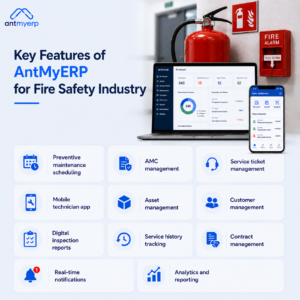
AntMyERP helps fire and safety businesses digitize preventive maintenance and service operations through a centralized platform.
Key Features
- Preventive maintenance scheduling
- AMC management
- Service ticket management
- Mobile technician app
- Asset management
- Customer management
- Digital inspection reports
- Service history tracking
- Contract management
- Real-time notifications
- Analytics and reporting
By automating maintenance workflows, fire and safety companies can improve service quality, reduce downtime, and maintain compliance more effectively.
Best Practices for Preventive Maintenance in Fire and Safety Industry
- Create a preventive maintenance schedule
- Maintain detailed service records
- Conduct regular inspections
- Train technicians regularly
- Use digital checklists
- Monitor compliance requirements
- Track maintenance KPIs
- Adopt field service management software
Industry experts recommend following global fire safety practices published by IFSEC Global
Conclusion
Preventive maintenance is essential for ensuring fire and safety equipment remains reliable, compliant, and ready for emergencies. Regular inspections, timely servicing, and digital maintenance tools help organizations reduce risk, improve operational efficiency, and extend equipment lifespan.
For fire and safety companies managing multiple customers, assets, and service contracts, using preventive maintenance management software can simplify maintenance operations and improve overall service delivery.