
The Future of Managed Print Services Is Not About Printers, It’s About Data
2026-09-09
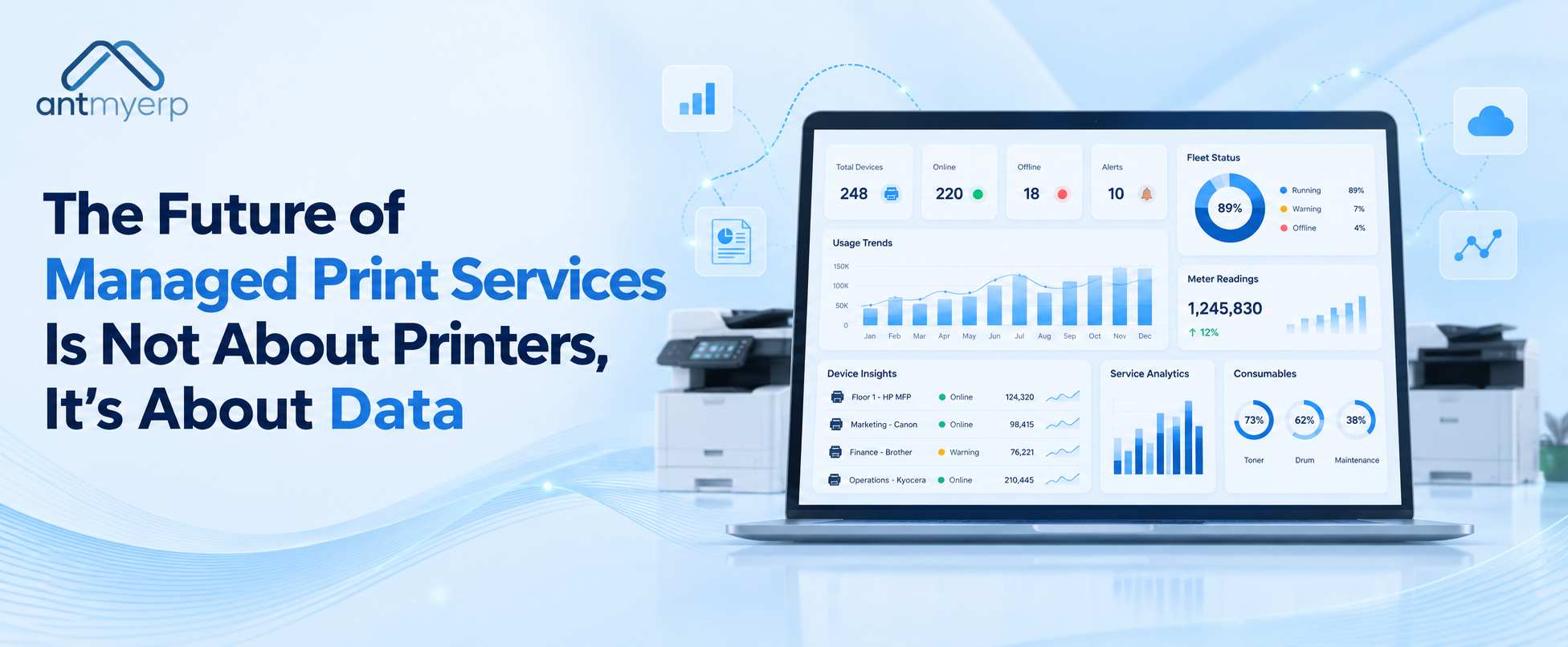
The future of Managed Print Services is changing. Printers will always be important, but the real value now comes from the data behind them. Printer usage, meter readings, service history, consumable levels, and device performance can help MPS providers make smarter decisions. Businesses that use this data effectively can improve service, reduce downtime, control costs, and build stronger customer relationships.
For years, Managed Print Services has been closely connected with printers, toner, maintenance, and service visits.That made sense.
After all, printers are at the center of the business.
However, the future of Managed Print Services is becoming much bigger than the machines themselves.
Today, every printer generates useful information. Print volumes, meter readings, service records, toner usage, device performance, and maintenance history can all tell a story about how a print environment works.The businesses that understand this information can make better decisions.
That is why the future of Managed Print Services is not just about managing printers. It is about managing the data behind them.
Managed Print Services Is Moving From Hardware to Data
Traditionally, Managed Print Services focused heavily on physical devices.Providers installed printers, supplied consumables, collected meter readings, and responded when customers reported problems.
Much of the work was reactive.A printer stopped working.The customer contacted the provider.A technician was assigned.
The technician visited the location and resolved the problem.While this model still exists, customer expectations are changing.
Businesses now expect faster service and better visibility. They want fewer disruptions and more control over their print environment.
To deliver this, managed print service providers need better information.They need to understand what is happening across their entire printer fleet.This is where printer data becomes valuable.
According to the Quocirca Managed Print Services 2025 report, MPS is increasingly evolving beyond device fleet management to include information security and management, creating greater business value for organizations.
Every Printer Generates Useful Data
A printer is no longer just a machine that prints documents.It is also a source of operational information.
Depending on the environment, MPS providers may track information such as:
- Print volumes
- Meter readings
- Toner consumption
- Device location
- Printer status
- Service history
- Maintenance records
- Device utilization
- Service requests
- Spare parts usage
Individually, these numbers may not seem important.However, when businesses look at this information together, they can identify patterns.
For example, data may show that a specific device requires frequent repairs. Another device may have unusually high print volumes. A particular customer location may use consumables faster than expected.
A centralized printer management service software solution can help businesses organize this device information, meter readings, and service history in one place.
These insights help providers understand what is happening before making a decision.That is the difference between simply collecting information and using data effectively.
Data Helps Managed Print Services Become More Proactive
One of the biggest changes in the Managed Print Services industry is the move toward proactive service.Reactive service starts after a problem happens.
Proactive service focuses on identifying possible issues earlier.
For example, service history can help businesses identify devices that repeatedly experience similar problems.Print usage data can show which machines experience heavy workloads.
Maintenance records can help teams understand when devices may require attention.
Historical service and device data can also support better preventive maintenance planning and help teams address recurring issues earlier.
This information helps service teams plan better.Instead of waiting for every customer to report a problem, MPS providers can use available information to improve maintenance planning.
As a result, businesses can reduce unnecessary downtime and create a better customer experience.
From Printer Problems to Better Business Decisions
The value of data goes beyond fixing devices.Data can also support better business decisions.
Imagine an MPS provider managing hundreds or even thousands of devices.Without proper visibility, managers may struggle to answer simple questions.
- Which printers require the most service?
- Which customers generate the highest service workload?
- Which devices consume the most toner?
- Where are operational costs increasing?
- Which locations have the highest print volumes?
Without centralized information, answering these questions may require spreadsheets, emails, and manual follow-ups.
This takes time.
It can also increase the risk of errors.When businesses organize their data properly, managers can access useful information faster.They can make decisions based on actual operational patterns instead of assumptions.
Why Meter Readings Are More Than Billing Data
Meter readings have always played an important role in Managed Print Services.Traditionally, they are mainly associated with billing.However, meter readings can provide much more value.
Over time, usage information can help businesses understand printer activity.
For example, print volume data may reveal:
- Frequently used devices
- Low-utilization devices
- Changes in customer usage
- High-volume locations
- Usage patterns over time
This information can support better planning.It can also help providers understand how customers use their print environments.Therefore, meter readings should not be viewed as just numbers required for invoices.They are also an important source of business insight.
Data Can Improve Printer Fleet Management
Managing a large printer fleet can become difficult without accurate information.Each device may have a different location, customer, service history, and usage pattern.When this information is spread across different systems, teams can lose visibility.A centralized approach to printer fleet management makes it easier to understand the complete picture.
Teams can organize information related to devices, customers, services, and operational activities.This helps businesses answer important questions faster.
For example:
- Where is a particular device located?
- Who is responsible for servicing it?
- When was the last maintenance visit completed?
- Has the device experienced similar problems before?
- What consumables does the device require?
Better visibility creates better control.And better control helps MPS providers deliver more consistent service.
The Future of Managed Print Services Includes Predictive Thinking
The future of MPS will increasingly depend on understanding patterns.Historical information can help businesses identify trends.
For example, if a device regularly requires service after a certain period of use, that pattern may become visible through service records and usage data.
If a customer consistently experiences high consumable usage, that information can support better inventory planning.The goal is not simply to collect more data.The goal is to understand what the data means.This creates opportunities for more predictive and proactive decision-making.
Instead of asking only, “What happened?”
Businesses can begin asking:
“What might happen next?”
This is an important shift for the future of Managed Print Services.
Consumable Management Will Become More Data-Driven
Toner and other consumables are a major part of print operations.However, managing consumables manually becomes more difficult as the business grows.Providers need to balance inventory carefully.
Too much stock can increase carrying costs.
Too little stock can delay customer service.
Data can help businesses understand consumption patterns.
They can track which consumables are used, where they are used, and how frequently they are required.This information supports better planning.
For example, service teams can use historical usage information to improve their understanding of customer requirements.
As a result, businesses can create more organized toner management and consumable management processes.
Better Data Helps Technicians Work More Efficiently
Technicians need information to complete service jobs successfully.Before visiting a customer, it helps to know:
- Device details
- Customer location
- Previous service history
- Reported problems
- Previous technician notes
- Required spare parts
Without this information, technicians may spend extra time understanding the situation.In some cases, they may need to make additional visits.
Centralized service information can reduce this confusion.
Integrated field service management software can help technicians access customer details, service history, and job information before visiting the site.When technicians have access to relevant information, they can prepare better for service work.This improves technician productivity and creates a smoother workflow.
It can also help businesses reduce unnecessary follow-ups.
Managed Print Services Is Becoming a Connected Operation
The future of Managed Print Services will involve more connected operations.Customer information should connect with device records.
Device records should connect with service history.Service history should connect with technician activities.Consumable information should support operational planning.
When these activities work in isolation, teams lose valuable context.However, when information is connected, businesses gain better operational visibility.
This is where MPS software and integrated print service management systems can support modern operations.
The goal is to create one connected view of the business.Instead of searching through multiple spreadsheets, teams can access the information they need from a centralized system.
Data Can Help Managed Print Service Providers Understand Costs
Revenue is important, but it does not always show the complete business picture.A customer may generate significant revenue while also requiring frequent technician visits and expensive service activities.
Without proper data, these costs can be difficult to understand.MPS providers need visibility into operational activities.
This can include:
- Service frequency
- Technician time
- Spare parts usage
- Consumable costs
- Device performance
- Customer service requirements
When businesses understand these factors, they can make better decisions.They can identify areas where costs are increasing.They can also improve workflows that consume unnecessary time and resources.
This makes data important not only for service management but also for long-term profitability.
The Customer Experience Will Also Become More Data-Driven
Customers want fast and reliable service.They do not want to repeat the same information every time they contact a provider.
When customer and device information is organized, service teams can understand the situation faster.For example, a service representative can review the customer record and device history before assigning a request.
The technician can understand previous service activities before visiting the location.This creates a more connected customer experience.
The customer spends less time explaining the problem.The service team spends less time searching for information.As a result, the entire process becomes smoother.
The Future of Managed Print Services Is About Insights
Printers will remain important.They are still the physical foundation of the industry.
However, the competitive advantage will increasingly come from how businesses use the information connected to those devices.
The most successful managed print service providers will not simply manage more printers.They will understand their operations better.
They will use data to:
- Improve service planning
- Reduce printer downtime
- Understand customer needs
- Manage consumables
- Improve technician productivity
- Monitor device performance
- Control operational costs
The future is not about replacing printers with data.
It is about using data to manage printers more intelligently.
How AntMyERP Supports Data-Driven Print Operations
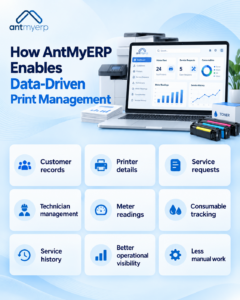
Modern print businesses manage many moving parts. AntMyERP helps bring important operational information together in one centralized platform, including:
- Customer information and records
- Printer and device details
- Service requests and job tracking
- Technician management
- Meter readings
- Consumable tracking
- Service and maintenance history
- Connected operational workflows
- Better visibility across print operations
- Reduced dependence on spreadsheets and manual follow-ups
By connecting service activities, customer records, device information, and other business processes, AntMyERP helps print service businesses create more organized workflows and make faster, data-driven decisions.
Conclusion
The future of Managed Print Services is changing.Printers will always be an important part of the industry. However, the information generated by those printers is becoming equally valuable.
Print volumes, meter readings, service history, consumable usage, technician activity, and device performance all provide useful business insights.The challenge is not collecting more information.
The challenge is using that information effectively.Businesses that understand their data can improve service, reduce downtime, manage costs, and make smarter operational decisions.
The future of Managed Print Services is not simply about managing printers.It is about understanding the story behind the data.And the businesses that use that data effectively will be better prepared for what comes next.