
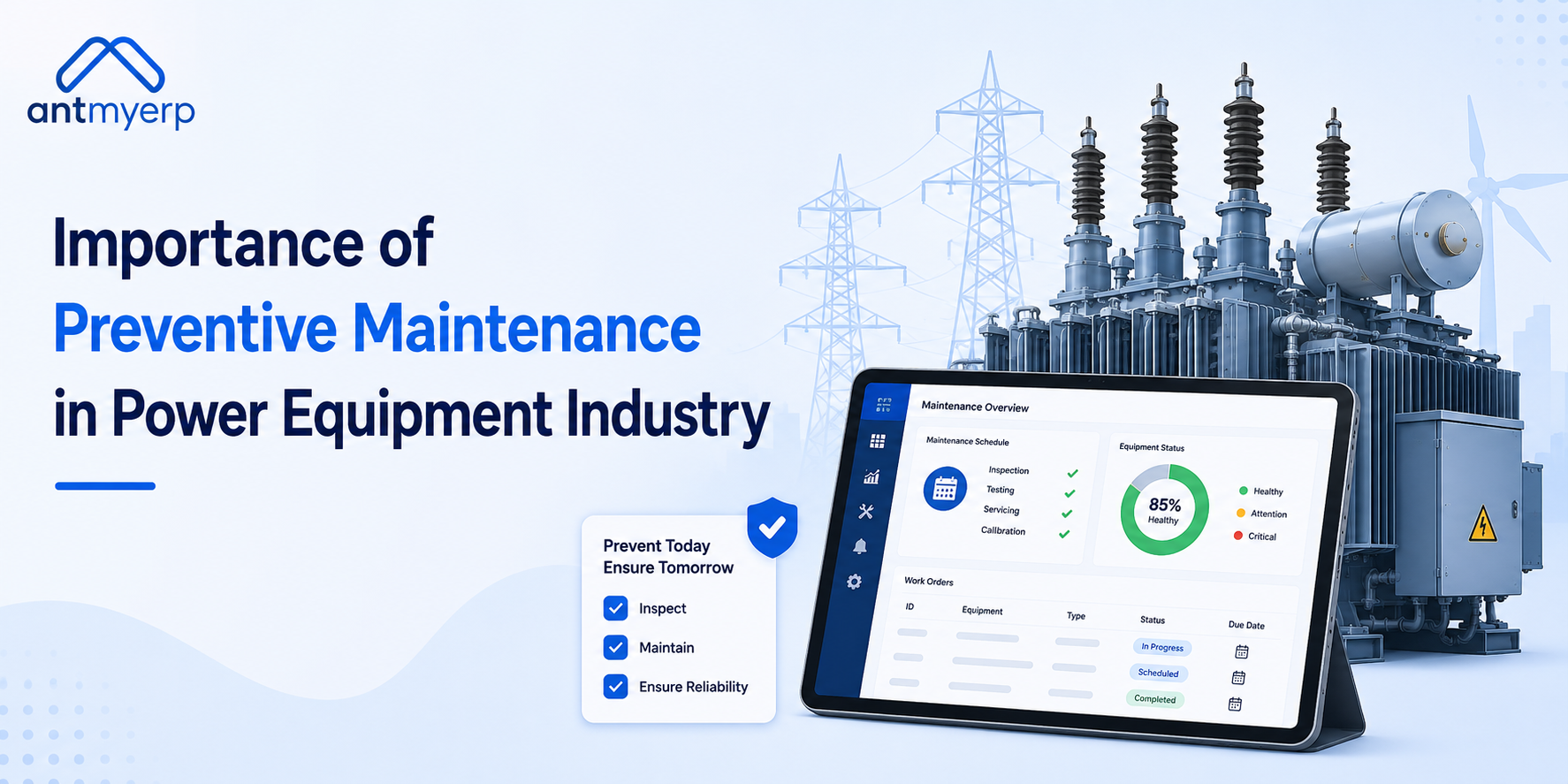
Importance of Preventive Maintenance in Power Equipment Industry
2026-06-24
Preventive maintenance in the power equipment industry involves regularly inspecting, testing, servicing, and maintaining equipment before failures occur. By performing maintenance on a scheduled basis, organizations can reduce downtime, improve reliability, extend equipment life, and maintain safe operations. Commonly maintained assets include generators, transformers, switchgear, circuit breakers, UPS systems, and power distribution equipment.
What Is Preventive Maintenance in the Power Equipment Industry?
Power equipment is often responsible for keeping critical operations running. Whether it is a manufacturing facility, utility provider, data center, or industrial plant, equipment failures can lead to costly disruptions.
Preventive maintenance is a planned maintenance strategy where equipment is inspected, tested, cleaned, lubricated, calibrated, and serviced before problems occur. Instead of waiting for a transformer, generator, or circuit breaker to fail, maintenance teams follow scheduled maintenance plans based on operating hours, manufacturer recommendations, asset condition, or risk level.
For example, a maintenance team may perform transformer oil analysis every six months, inspect switchgear connections quarterly, or test backup generators monthly. These activities help identify problems early and reduce the risk of unexpected failures.
Why is Preventive Maintenance of Electrical Equipment Important?
Power equipment failures can have serious consequences. A failed transformer can interrupt production, a malfunctioning circuit breaker can create safety risks, and an unreliable backup generator can leave critical facilities without emergency power.
Preventive maintenance helps organizations identify warning signs before equipment reaches the point of failure.
Some common maintenance activities include:
- Transformer oil testing
- Thermal imaging inspections
- Circuit breaker testing
- Switchgear cleaning and servicing
- Generator load bank testing
- Battery health checks
- Electrical connection inspections
By addressing issues early, organizations can improve reliability, reduce downtime, and avoid costly emergency repairs.
Benefits of Preventive Maintenance for Electrical and Power Equipment
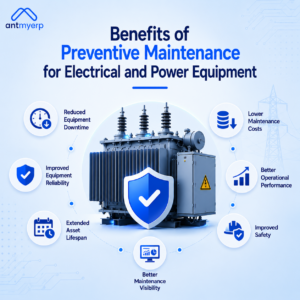
Reduced Equipment Downtime
Regular maintenance helps find and fix small problems before they become major failures. This keeps equipment running and reduces unexpected breakdowns.
Improved Equipment Reliability
When equipment is serviced regularly, it works properly and is less likely to stop working when needed.
Extended Asset Lifespan
Cleaning, inspecting, and servicing equipment regularly helps it stay in good condition and last longer.
Lower Maintenance Costs
Fixing a small issue early costs much less than repairing equipment after a major breakdown.
Better Operational Performance
Well-maintained equipment runs more smoothly, uses less energy, and performs its job more effectively.
Improved Safety
Regular inspections help identify damaged parts, loose connections, and other safety issues before they cause accidents.
Better Maintenance Visibility
Maintenance teams can easily see service schedules, inspection records, and maintenance history, making maintenance easier to manage.
AntMyERP’s Power Equipment Field Service Software helps power equipment companies manage preventive maintenance easily. It automates maintenance schedules, tracks equipment health, manages service tasks, and stores maintenance records in one place.
With features like work order management, service tracking, inventory control, and real-time reports, AntMyERP helps reduce downtime and improve equipment performance.
Types of Power Equipment That Need Preventive Maintenance
Many power assets require ongoing maintenance to ensure safe and reliable operation.
Common examples include:
- Generators
- Transformers
- Switchgear
- Circuit breakers
- UPS systems
- Electrical panels
- Motors
- Pumps
- Compressors
- Backup power systems
- Power distribution equipment
Because each asset has unique maintenance requirements, organizations often prioritize maintenance based on equipment criticality and operational impact.Different types of power equipment require specific maintenance procedures and inspection schedules. Using a detailed preventive maintenance checklist helps ensure that no critical maintenance task is missed. Read our guide on Preventive Maintenance Checklist for Power Equipment Industry for a complete equipment-wise checklist.
Common Maintenance Challenges in Power Equipment Operations
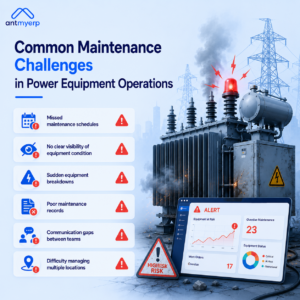
Even organizations with experienced maintenance teams face operational challenges.
Missed maintenance schedules
When work is planned manually, inspections and servicing can get delayed or missed.
No clear view of equipment condition
If records are not in one place, it is hard to know machine history and performance.
Sudden equipment breakdowns
If checks are not done on time, small problems can turn into big failures.
Poor maintenance records
Using paper or spreadsheets makes it difficult to track all maintenance work properly.
Communication problems
Field workers and office staff may depend on calls or emails, which slows updates.
Managing many locations is hard
When companies have multiple sites, it becomes difficult to follow the same maintenance process everywhere.
How to Implement a Preventive Maintenance Program for Electrical Equipment
Step 1: List All Equipment
Write down all machines and equipment you have. Include name, location, and basic details.
Step 2: Find Important Equipment
Mark the machines that are most important for your work. These should get more attention.
Step 3: Make a Maintenance Plan
Decide when each machine should be checked or serviced (daily, weekly, monthly, etc.). Maintenance schedules should be based on equipment criticality, operating conditions, manufacturer recommendations, and recognized asset management frameworks.
Step 4: Assign Work to People
Give clear responsibility to technicians or team members for each task.
Step 5: Keep Records
Write down every inspection, repair, and service done on the equipment.
Step 6: Check Performance
Regularly review if machines are working well and update the maintenance plan if needed.
Why Most Power Equipment Companies Prefer Preventive Maintenance
There are two common ways companies maintain power equipment.
Reactive maintenance means fixing equipment only after it breaks down. While this may save money in the short term, unexpected failures can cause downtime, emergency repair costs, and operational disruptions.
Preventive maintenance means inspecting and servicing equipment regularly before problems occur. This helps maintenance teams identify issues early, reduce breakdowns, improve equipment reliability, and avoid costly repairs.
For critical power equipment such as generators, transformers, and switchgear, preventive maintenance is often the better approach because it helps keep operations running smoothly and safely.
How CMMS and Field Service Management Software Improve Maintenance Operations
As equipment inventories grow, manual maintenance management becomes increasingly difficult.
CMMS and field service management software help maintenance teams automate and organize preventive maintenance activities.
Key capabilities include:
- Preventive maintenance scheduling
- Automated work orders
- Asset tracking
- Maintenance history management
- Technician scheduling
- Inspection checklists
- Spare parts management
- Maintenance reporting and analytics
By centralizing maintenance information, organizations can improve planning, reduce administrative work, and increase equipment reliability.
Mobile Apps for Preventive Maintenance in Power Equipment Operations
Maintenance technicians often spend most of their time in the field rather than in the office.
Mobile maintenance applications provide instant access to maintenance information from any location.
Technicians can:
- View assigned work orders
- Access asset history
- Complete digital inspections
- Upload photos and reports
- Update job status in real time
- Record maintenance activities immediately
This improves communication, reduces paperwork, and speeds up maintenance reporting.
Electrical Equipment Maintenance Safety and Compliance Requirements
Preventive maintenance helps keep power equipment safe and working properly. Regular inspections and maintenance also help companies follow safety rules and industry requirements.
By keeping maintenance records, organizations can:
- Improve workplace safety
- Reduce the risk of equipment failures
- Meet safety and compliance requirements
- Prepare for audits and inspections
- Track maintenance and inspection history
- Provide proof of maintenance activities when needed
Regular inspections, testing, and maintenance activities should also align with recognized electrical equipment testing standards to help ensure equipment reliability, safety, and compliance.
Good maintenance records make it easier to show that equipment has been inspected and serviced regularly during audits, customer reviews, and compliance checks. Using an AMC management software system helps organizations maintain proper service history and compliance documentation in one place.
Key Takeaways on Preventive Maintenance of Electrical Equipment
- Preventive maintenance of electrical equipment helps reduce unexpected equipment failures and downtime.
- Regular inspections improve the reliability and performance of power equipment.
- Planned maintenance extends the lifespan of generators, transformers, switchgear, and other critical assets.
- Early issue detection helps lower repair and replacement costs.
- Maintenance records support safety standards and compliance requirements.
- CMMS and field service management software help automate maintenance scheduling and tracking.
- Mobile maintenance apps improve technician productivity and real-time reporting.
- A structured preventive maintenance program helps ensure reliable and efficient power operations.
AntMyERP helps power equipment companies manage preventive maintenance schedules, work orders, asset tracking, technician assignments, inspections, and maintenance reporting from a single platform.