
Why AMC Contracts Become Difficult to Manage After the First 100 Customers
2026-09-28
Managing more than 100 AMC customers can make contract tracking, renewals, service schedules, billing, and service history difficult to handle manually. AMC management software can centralize customer contracts, automate renewal reminders, schedule preventive maintenance, track service history, and support recurring billing. A structured AMC contract management process helps service teams maintain better visibility as the number of contracts grows.
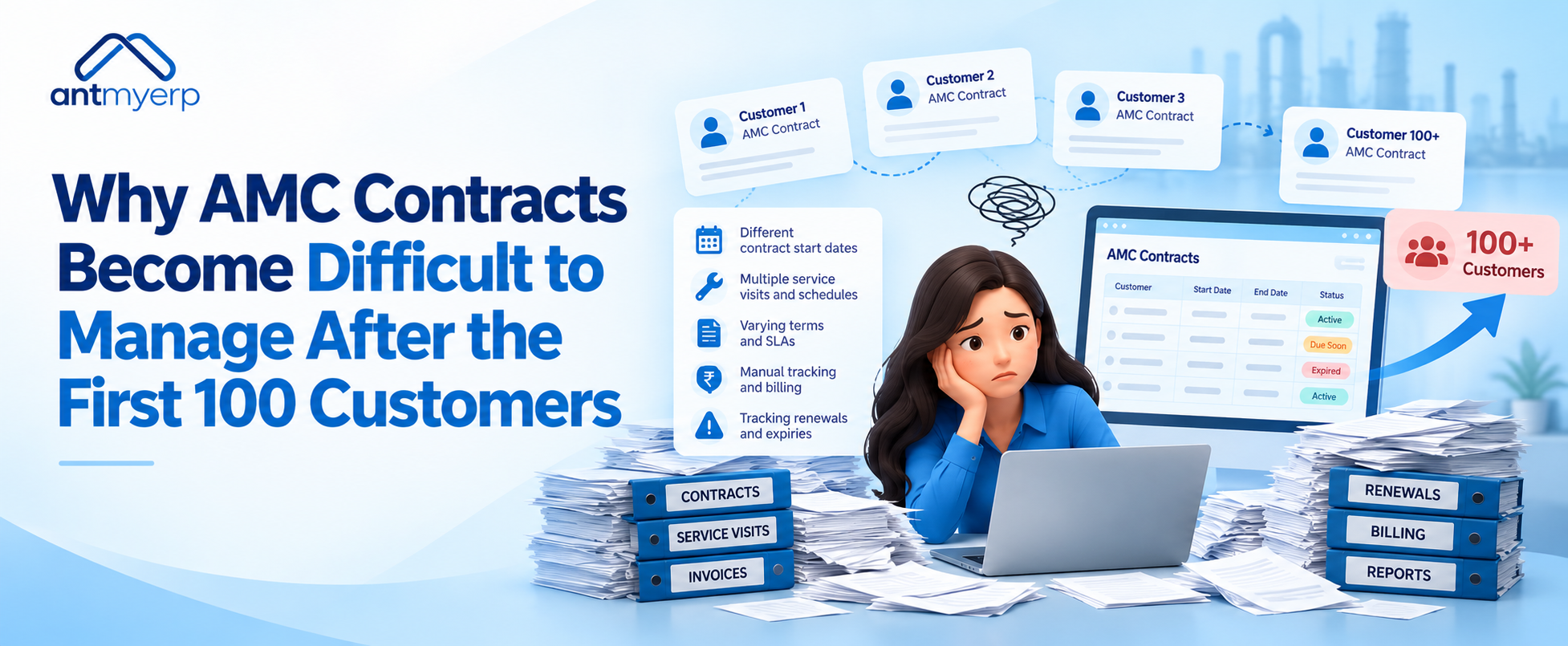
Managing a few AMC contracts may seem simple. But as the customer base grows, AMC contract management becomes more difficult. After reaching 100 customers, service teams may need to track hundreds of contract dates, service schedules, renewal activities, invoices, and service records.
A spreadsheet or manual process that worked for 20 or 30 customers can become difficult to maintain at a larger scale. Missing one contract expiry date or scheduled service can affect customer satisfaction and recurring revenue. This is why businesses need a structured approach to managing AMC contracts as they grow.
Why AMC Contract Management Gets Harder After 100 Customers
Every AMC contract can have different terms, renewal dates, service schedules, billing cycles, and customer requirements. Managing these details manually becomes increasingly difficult as the number of contracts increases.
For example, one customer may require quarterly preventive maintenance, while another may have monthly service visits. Some contracts may renew annually, while others may have different expiry dates.
Without centralized AMC contract tracking, service teams may spend more time searching for information and following up manually. Businesses can follow a structured approach to organize contract details, renewals, service schedules, and customer records. For a detailed overview, read our guide on Managing AMC Contracts: The Complete Guide.
The challenge is not simply having more customers. It is managing more contract-related activities at the same time.
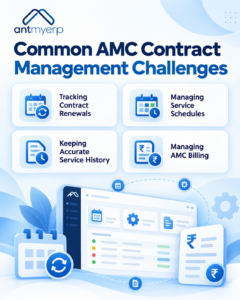
Common AMC Contract Management Challenges
Tracking Contract Renewals
Renewals are one of the most important parts of AMC renewal management. When teams manage contracts manually, it can be difficult to identify which agreements are approaching their expiry dates.
A missed renewal can result in:
- Delayed customer follow-ups
- Expired service coverage
- Missed recurring revenue
- Last-minute renewal discussions
- Poor customer experience
AMC renewal tracking helps teams identify upcoming renewals and take action before contracts expire.
Managing Service Schedules
AMC customers often receive scheduled maintenance or service visits during the contract period. As the customer base grows, keeping track of every service schedule becomes more difficult.
Teams may need to monitor:
- Upcoming service dates
- Completed services
- Pending visits
- Technician assignments
- Service history
- Customer-specific requirements
This is where preventive maintenance software can support scheduled maintenance activities and help teams keep service tasks organized.
Without proper AMC service schedule management, scheduled activities can be overlooked or delayed.
AMC contract requirements can vary by industry. For example, businesses managing CCTV and security installations may need regular maintenance visits, equipment checks, service history, and renewal tracking. Learn more about AMC software for security and CCTV installation.
Keeping Accurate Service History
Each customer interaction adds to the service record. Over time, this creates a large amount of information that needs to be maintained. AMC service history can include completed maintenance activities, service requests, technician notes, replaced parts, and previous visits.
When this information is stored across different spreadsheets or files, finding the right record can take time. A centralized system makes it easier for service teams to view the history of a customer and understand what work has already been completed.
Managing AMC Billing
AMC contracts can involve recurring billing based on contract terms, service periods, or agreed payment schedules. The pricing of an AMC can vary based on factors such as equipment type, service coverage, SLA requirements, and contract duration. For more details, see our guide on AMC Pricing Model for IT Equipment.
As the number of customers increases, AMC billing management becomes more difficult to handle manually. Teams may need to track billing dates, invoice status, contract values, and outstanding payments across many customers. A centralized process can help teams connect contract information with contract billing and recurring invoices.
Why Spreadsheets Become Difficult to Manage
Spreadsheets can be useful when a business has a small number of contracts. However, managing hundreds of customer contracts in spreadsheets creates several challenges.
Spreadsheets can be useful when a business has a small number of contracts. However, managing hundreds of customer contracts in spreadsheets creates several challenges. As the amount of data grows, businesses also need to consider spreadsheet limitations and data-management requirements. Microsoft’s Excel specifications and limits page explains the worksheet size and other limits that can affect how much information can be managed in a single workbook.
Teams may need multiple sheets to manage:
- Customer information
- Contract start and expiry dates
- Renewal status
- Service schedules
- Billing information
- Service history
As information grows, maintaining accurate records becomes harder. A change made in one sheet may not be reflected elsewhere. Important updates can also get buried among hundreds of rows.
Manual contract tracking can therefore increase the risk of missed renewals, delayed services, and incorrect information.
How AMC Management Software Helps
AMC management software provides a centralized way to manage contracts, customers, service activities, renewals, and billing. Teams can keep important contract information in one system rather than maintaining separate records.
With AMC contract management software, businesses can:
- Store customer and contract details
- Track contract start and expiry dates
- Set renewal reminders
- Manage service schedules
- Maintain service history
- Track contract billing
- Monitor pending activities
- Manage customer records
Automated reminders can also help teams identify upcoming renewals and scheduled services before they become overdue.
AntMyERP’s AMC Management Software supports contract tracking, preventive maintenance scheduling, renewal alerts, service activities, and billing-related processes in one system.
This reduces dependence on manual follow-ups and makes AMC contract management easier as the customer base grows.
Building a Scalable AMC Contract Management Process
A growing service business needs more than a list of contracts. It needs a process that connects contracts with customers, services, renewals, and billing.
A scalable process can follow these steps:
- Customer Registration
- Contract Creation
- Service Schedule
- Service Activity
- Service History
- Billing
- Renewal Reminder
- Contract Renewal
This approach gives teams better visibility into the complete contract lifecycle. For example, when a contract approaches its expiry date, the team can receive a reminder, review the customer’s service history, contact the customer, and begin the AMC contract renewal process.
The same information can then continue into the next contract period.
When Should Businesses Move Beyond Manual AMC Tracking?
There is no fixed customer number at which every business must adopt software. However, growing contract volumes can make manual processes increasingly difficult to maintain.
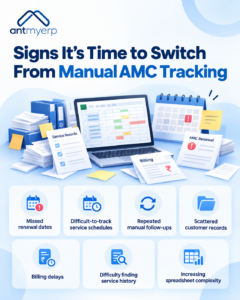
Businesses should consider a more structured maintenance contract management software approach when they regularly face:
- Missed renewal dates
- Difficult-to-track service schedules
- Repeated manual follow-ups
- Scattered customer records
- Billing delays
- Difficulty finding service history
- Increasing spreadsheet complexity
The goal is not simply to replace a spreadsheet. It is to create a more reliable process for managing contracts as the business grows.
How to Improve AMC Contract Management as You Scale
Growing from 20 customers to 100 or more changes the volume of work your service team handles. Instead of adding more spreadsheets and manual reminders, businesses can create a standardized process for every contract.
Start by keeping customer and contract information in one place. Then connect each contract with its covered products, service schedules, billing details, and renewal dates.
Automated reminders can help teams identify upcoming contract renewals, while centralized service records make it easier to review previous work before the next service visit.
This approach helps create better visibility across the AMC lifecycle and gives service teams a consistent way to manage a growing customer base.
Conclusion
The first 100 AMC customers can change how a service business manages its contracts. More customers mean more renewal dates, service schedules, billing activities, and service records to monitor.
Manual processes may work at a smaller scale, but they can become difficult to maintain as contract volumes increase.
With structured AMC contract management, businesses can organize customer contracts, track renewals, manage service schedules, maintain service history, and handle recurring billing more efficiently.
For growing service businesses, AMC management software can provide the centralized visibility needed to manage contracts beyond the first 100 customers.