
Why AC Service Complaints Increase During Heatwaves And How HVAC Companies Can Handle Them Better
2026-07-22
Heatwaves put extra pressure on air conditioners, leading to more breakdowns, emergency repair requests, and customer complaints. For HVAC businesses, this means handling more work orders, dispatching technicians efficiently, managing spare parts, and maintaining clear customer communication.
HVAC Service Management Software helps companies streamline summer operations through intelligent scheduling, automated dispatch, preventive maintenance planning, inventory management, and real-time service updates. As a result, HVAC companies can reduce delays, improve technician productivity, and deliver a better customer experience during peak demand.
AC service complaints rise sharply during heatwaves because cooling systems run longer, components fail more often, and HVAC companies receive a sudden surge in service requests. HVAC Service Management Software helps HVAC businesses manage peak summer demand by automating work orders, technician scheduling, dispatch, preventive maintenance, inventory tracking, and customer communication. This enables faster response times, higher first-time fix rates, and better customer satisfaction during the busiest season of the year.
Why Do AC Service Complaints Increase During Heatwaves?
Heatwaves create one of the busiest service periods for HVAC companies. As outdoor temperatures remain high for extended periods, air conditioners operate almost continuously, increasing wear on critical components and causing more service calls.
Below are the primary reasons AC service complaints increase during summer.
1. Air Conditioners Run Continuously
During extreme heat, AC systems work harder to maintain indoor temperatures. Continuous operation places additional stress on compressors, fan motors, capacitors, refrigerant systems, and electrical components.
Common customer complaints include:
- AC not cooling properly
- Warm air from vents
- Water leakage
- Frozen evaporator coils
- Strange noises
- Frequent power trips
- Higher electricity bills
Older or poorly maintained systems are especially vulnerable during prolonged heatwaves.
2. Service Requests Increase Suddenly
A heatwave can generate weeks’ worth of service requests within just a few days.
HVAC companies often receive:
- Emergency AC repair requests
- Preventive maintenance bookings
- Air conditioner installation requests
- Warranty service calls
- Repeat repair visits
Without a structured service process, work order backlogs grow quickly, leading to longer customer wait times.
3. Technician Scheduling Becomes More Difficult
Many HVAC businesses still rely on manual scheduling using spreadsheets, phone calls, or whiteboards.
During peak summer, this often results in:
- Double-booked technicians
- Missed appointments
- Long travel times
- Delayed emergency repairs
- Uneven technician workloads
Using HVAC Scheduling Software within an HVAC Service Management Software platform automatically assigns jobs based on technician skills, availability, location, and priority, helping teams respond faster.
4. Spare Parts Become Difficult to Manage
Heatwaves significantly increase demand for replacement components such as:
- Compressors
- Capacitors
- Contactors
- Fan motors
- Thermostats
- Refrigerant components
Without real-time inventory visibility, technicians may arrive without the required parts, leading to repeat visits and dissatisfied customers.
5. Customers Expect Faster Communication
Today’s customers expect regular updates throughout the service process.
They want to know:
- When the technician will arrive
- Current job status
- Repair progress
- Estimated completion time
- Digital service reports
Poor communication often results in negative customer experiences, even when repairs are completed successfully.
What Challenges Do HVAC Companies Face During Peak Summer?
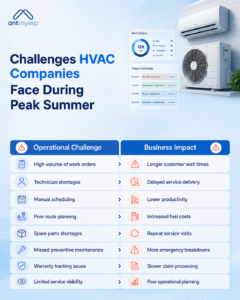
As demand increases, HVAC companies commonly face these operational challenges:
- High volume of work orders leads to longer customer wait times.
- Technician shortages delay service delivery.
- Manual scheduling reduces technician productivity.
- Poor route planning increases fuel costs and travel time.
- Spare parts shortages result in repeat service visits.
- Missed preventive maintenance causes more emergency breakdowns.
- Warranty tracking issues slow claim processing.
- Limited service visibility makes operational planning difficult.
These challenges reduce profitability, lower technician efficiency, and negatively impact customer satisfaction.
What is HVAC Service Management Software?
HVAC Service Management Software is a digital platform that helps HVAC contractors manage the complete service lifecycle from customer service requests to work order management, technician scheduling, dispatch, preventive maintenance, inventory management, warranty tracking, invoicing, and service history.
Instead of managing operations across multiple spreadsheets and phone calls, HVAC businesses can centralize everything in one system, improving efficiency and visibility across field operations.
How HVAC Service Management Software Helps During Heatwaves
1. Intelligent Work Order Management
Instead of manually assigning service requests, HVAC Service Management Software automatically creates and prioritizes work orders based on urgency, customer location, technician availability, and service agreements.
Benefits include:
- Faster response times
- Reduced manual effort
- Better workload distribution
- Improved service visibility
2. HVAC Scheduling Software Optimizes Technician Availability
HVAC Scheduling Software automatically assigns technicians based on:
- Skill set
- Current location
- Availability
- Priority level
- Existing workload
This minimizes scheduling conflicts and helps companies manage more service requests during peak summer.
3. HVAC Service Software Speeds Up Emergency Repairs
Emergency service calls require immediate action. HVAC Service Software identifies the nearest qualified technician and dispatches them instantly.
Benefits include:
- Reduced travel time
- Faster emergency response
- More completed jobs per day
- Lower fuel expenses
- Better customer satisfaction
4. Mobile Access for Field Technicians
HVAC Technician Mobile App provides technicians with a mobile application where they can access:
- Customer information
- Equipment history
- Previous repairs
- Digital inspection checklists
- Required spare parts
- GPS navigation
- Customer signatures
- Photos and service reports
Technicians can also update work orders in real time, improving communication with office staff.
5. Spare Parts Inventory Management
Integrated inventory management allows companies to:
- Track warehouse inventory
- Monitor technician stock
- Reserve parts before dispatch
- Receive low-stock alerts
- Record spare parts usage
This improves the first-time fix rate by ensuring technicians have the correct components before arriving onsite.
6. HVAC Preventive Maintenance Software Reduces Emergency Breakdowns
Rather than waiting for failures, HVAC Preventive Maintenance Software helps companies schedule inspections before peak summer begins.Preventive maintenance reduces emergency repairs and improves equipment reliability.
It enables businesses to:
- Automate maintenance schedules
- Send customer reminders
- Generate recurring work orders
- Monitor maintenance completion
- Extend equipment life
Preventive maintenance reduces emergency repairs and improves equipment reliability.
7. Better Customer Communication
Customers automatically receive notifications for:
- Appointment confirmation
- Technician assignment
- Estimated arrival time
- Job completion
- Digital service reports
- Invoice generation
This improves transparency and reduces follow-up calls.
8. Complete Equipment and Warranty History
Every service visit is stored digitally, including:
- Installation date
- Warranty information
- Previous repairs
- Annual Maintenance Contracts (AMC)
- Parts replaced
- Technician notes
Having complete service history enables technicians to diagnose problems faster and avoid duplicate work.
Best Practices for HVAC Companies Before Heatwave Season
Preparing before summer can significantly improve service performance during peak demand.
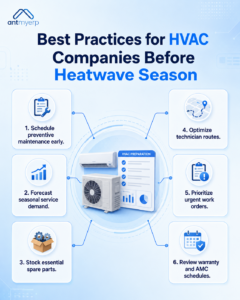
Recommended best practices include:
- Schedule preventive maintenance campaigns before temperatures rise.
- Forecast seasonal demand using historical service data.
- Stock high-demand spare parts.
- Train technicians for emergency repair scenarios.
- Optimize technician service territories.
- Automate appointment reminders.
- Track technician productivity using dashboards.
- Prioritize emergency work orders based on severity.
- Review warranty and AMC schedules before the summer season.
Benefits of HVAC Service Management Software During Peak Summer
- Faster response to emergency service requests
- Better technician utilization
- Higher first-time fix rates
- Improved work order management
- Reduced repeat service visits
- Better spare parts inventory control
- Faster technician dispatch
- Improved customer communication
- Increased operational efficiency
- Higher customer satisfaction
- Greater service revenue during peak summer
Key Take Aways
- Heatwaves significantly increase AC breakdowns, emergency repairs, and customer service requests, putting extra pressure on HVAC businesses.
- Managing peak summer demand requires more than hiring additional technicians. Efficient scheduling, dispatch, inventory management, preventive maintenance, and customer communication are equally important.
- HVAC Service Management Software helps automate daily operations, enabling faster technician dispatch, improved productivity, higher first-time fix rates, and better customer satisfaction.
- As extreme weather events become more frequent, adopting digital service management is essential for HVAC companies looking to scale operations and deliver reliable service year-round.
Ready to Handle Peak Summer Demand?
If your HVAC business is struggling with rising service requests, manual scheduling, or inventory challenges during heatwaves, HVAC Service Management Software can help. Automate work orders, optimize technician scheduling, manage spare parts, and deliver faster, more reliable service all from a single platform.