
Top Tier Asset Management System for Oil and Gas Plants
2026-09-21
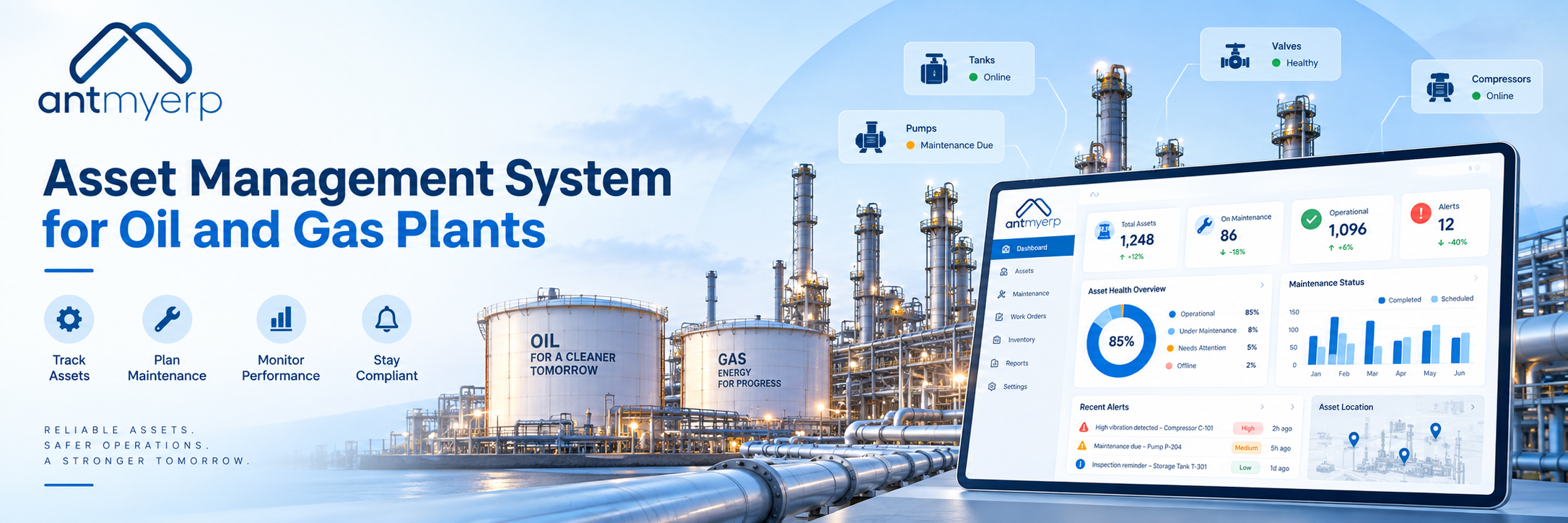
An Asset Management System helps oil and gas companies centralize asset information, track equipment, manage maintenance, reduce downtime, and improve operational visibility across multiple locations.
Oil and gas companies manage critical equipment, machinery, tools, and other operational assets across different locations. Keeping track of these assets manually can make it difficult to monitor their condition, maintenance history, location, and lifecycle.
An Asset Management System helps businesses centralize asset information, track equipment, plan maintenance, and improve operational visibility. Businesses can also use Asset Management Software to manage asset records, warranties, lifecycle information, and asset movement from one system.
For oil and gas operations, better asset visibility can support maintenance planning, reduce equipment downtime, and help management make informed decisions.
What Is an Asset Management System?
An Asset Management System is software that helps organizations manage physical assets throughout their lifecycle. It provides a centralized record of assets, including asset details, location, warranty, maintenance history, status, and movement.
For oil and gas companies, the system can be used to manage equipment and operational assets across plants, sites, warehouses, and other locations.
A centralized system also makes it easier for IT Heads, IT Managers, CEOs, CFOs, and operations teams to access reliable asset information when making business decisions.
Why Is Asset Management Important in the Oil and Gas Industry?
The oil and gas industry depends on equipment that must remain available and reliable for continuous operations. Equipment failures, missed maintenance, or poor asset visibility can affect productivity and increase operating costs.
Common challenges include:
- Managing assets across multiple locations
- Tracking equipment movement
- Maintaining accurate asset records
- Scheduling preventive maintenance
- Monitoring warranties and service history
- Managing spare parts
- Controlling maintenance costs
- Reducing unplanned equipment downtime
AntMyERP’s Oil and Gas Industry solution includes asset management, preventive maintenance, spare parts management, service management, and other service operations relevant to oil and gas businesses.
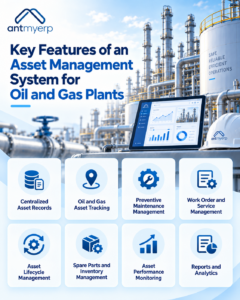
Key Features of an Asset Management System for Oil and Gas Plants
1. Centralized Asset Records
An Asset Management System maintains important asset information in one centralized location. Teams can record asset numbers, categories, locations, purchase details, warranty information, service history, and other relevant details.This reduces dependency on spreadsheets and makes asset information easier to access.
2. Oil and Gas Asset Tracking
Oil and gas companies need visibility into where their equipment is located and how it is being used.An Asset Management System can help track asset locations, movement, status, and history. This allows teams to identify where an asset is currently located and review its previous movement or service records.
AntMyERP’s Asset Management Software supports asset categorization, lifecycle tracking, movement tracking, warranty management, and reporting.
3. Preventive Maintenance Management
Regular maintenance is important for equipment used in oil and gas operations. Preventive maintenance helps teams identify upcoming maintenance requirements before equipment develops serious problems.An Asset Management System can connect assets with maintenance schedules and service history.
For more structured maintenance planning, Preventive Maintenance Software can help automate preventive maintenance activities and generate maintenance tickets based on defined requirements.
4. Work Order and Service Management
When equipment requires inspection, repair, or maintenance, teams need a clear process to create and monitor work orders.
Service teams can record service requests, assign work, track progress, and maintain service history. This provides better visibility into equipment-related maintenance activities.
AntMyERP’s Service and Repair Management Software supports service scheduling, technician assignment, work order tracking, inventory visibility, and service updates.
5. Asset Lifecycle Management
Asset management does not stop after equipment is purchased. Businesses need to monitor assets throughout their complete lifecycle.
An Asset Management System can help manage:
- Asset procurement
- Assignment
- Location
- Warranty
- Maintenance
- Service history
- Asset condition
- Movement
- Disposal
This gives management a complete view of asset performance and lifecycle costs. AntMyERP’s asset management solution supports lifecycle tracking from procurement through service and disposal.
6. Spare Parts and Inventory Management
Maintenance teams need quick access to the right spare parts when equipment requires service. Poor inventory visibility can delay repairs and increase downtime.
An Asset Management System can work alongside Inventory Management Software to help teams monitor spare parts, stock levels, locations, and inventory movement.
AntMyERP’s inventory system supports serial-number tracking, inventory movement, warehouse management, stock control, and inventory visibility across locations.
7. Asset Performance Monitoring
Asset performance data helps managers understand which equipment is performing well and which assets require more attention.
Teams can review service history, maintenance activity, asset condition, breakdown records, and other operational information to identify recurring problems.
This information can help organizations make better decisions about repair, replacement, maintenance, and asset utilization.
8. Reports and Analytics
An Asset Management System can bring asset information into reports and dashboards.
Management can use these reports to monitor:
- Asset status
- Asset location
- Maintenance history
- Warranty status
- Asset lifecycle
- Service activity
- Spare parts usage
- Asset performance
This gives CEOs, CFOs, IT Managers, and operations teams better information for planning and cost control.
Benefits of an Asset Management System for Oil and Gas Plants
Better Asset Visibility
A centralized asset database gives teams access to accurate information about equipment, location, status, warranty, and service history.
Improved Maintenance Planning
Maintenance teams can identify upcoming service requirements and plan activities before equipment failure occurs.
Reduced Unplanned Downtime
Better tracking and preventive maintenance can help identify maintenance requirements earlier and reduce the risk of unexpected equipment failures.
Improved Asset Utilization
Management can understand how assets are being used and identify equipment that is underutilized, unavailable, or nearing the end of its useful life.
Better Cost Control
Accurate information about asset condition, maintenance, spare parts, and lifecycle costs helps businesses make better repair and replacement decisions.
Faster Decision-Making
Instead of collecting information from different spreadsheets and departments, managers can access asset information from one centralized system.
How Does an Asset Management System Work in an Oil and Gas Plant?
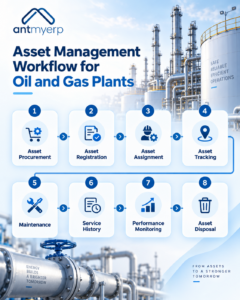
A typical asset management process can follow these steps:
- Asset Procurement
- Asset Registration
- Asset Assignment
- Asset Tracking
- Maintenance
- Service History
- Performance Monitoring
- Asset Disposal
Once an asset is registered, relevant information can be maintained throughout its lifecycle.
Maintenance and service activities can then be linked to the asset record. This creates a history that helps teams understand asset conditions and maintenance requirements over time.
Asset Management System vs. Manual Asset Tracking
Manual asset tracking often depends on spreadsheets, emails, paperwork, and separate records maintained by different teams.
An Asset Management System provides a centralized approach.
With a centralized system, businesses can improve:
- Asset visibility
- Data accuracy
- Maintenance tracking
- Asset movement tracking
- Warranty monitoring
- Reporting
- Lifecycle management
This can make asset-related information easier to access and reduce the administrative effort involved in maintaining separate records.
Asset Management System for Oil and Gas: What Should You Look For?
When selecting an Asset Management System, oil and gas companies should consider the following capabilities:
Centralized Asset Database
The system should provide a single location for asset information and history.
Asset Tracking
Look for location, movement, status, and serial-number tracking capabilities.
Preventive Maintenance
The software should support maintenance scheduling and service tracking.
Work Order Management
Maintenance teams should be able to create, assign, monitor, and close work orders.
Inventory Integration
The system should connect asset maintenance with spare parts and inventory information.
Reporting and Analytics
Management should have access to reports that support operational and financial decisions.
Integration
The system should be capable of connecting asset information with other business processes such as service, inventory, CRM, and finance.
Why Choose AntMyERP for Asset Management?
AntMyERP provides an integrated approach to asset, service, inventory, and maintenance management.
Its asset management capabilities include asset categorization, warranty management, lifecycle management, asset movement, reports, and asset registers.
For service-oriented operations, AntMyERP also connects asset management with field service, preventive maintenance, spare parts, and service processes.
This connected approach can help oil and gas businesses maintain better visibility across their assets and related operational activities.
Conclusion
An Asset Management System gives oil and gas businesses better control over equipment, maintenance, asset movement, and lifecycle information.
For organizations managing critical assets across multiple locations, centralized asset information can improve visibility and support better operational and financial decisions.
AntMyERP combines asset management with service, preventive maintenance, inventory, and field service capabilities, helping businesses manage connected operational processes from one system.