
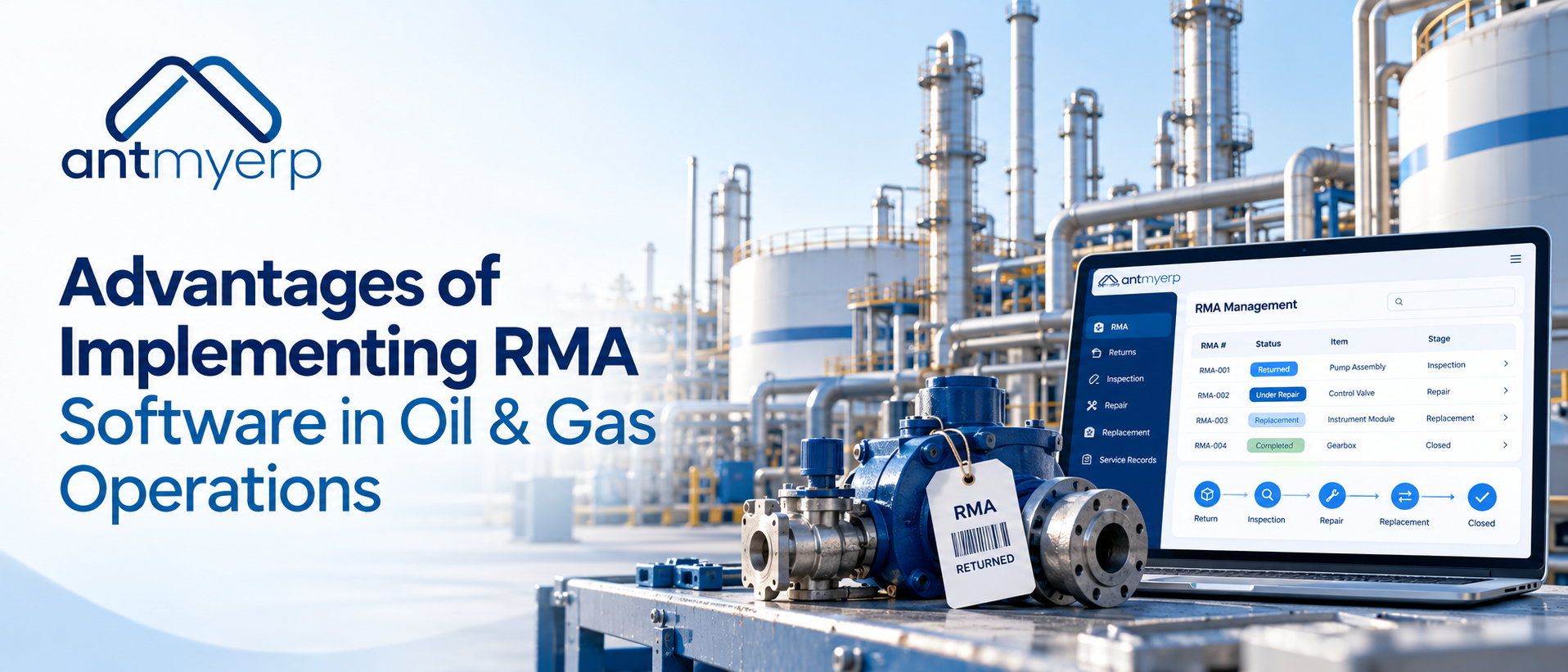
Advantages of Implementing RMA Software in Oil & Gas Operations
2026-10-09
RMA software helps oil and gas businesses manage returns, repairs, warranties, and equipment records in one system. It can support repair tracking, warranty management, equipment tracking, compliance records, and preventive maintenance.
Managing equipment, repairs, returns, and warranties is a major responsibility in oil and gas operations. Companies deal with expensive equipment, multiple suppliers, service records, replacement parts, and strict maintenance requirements. Without a proper system, tracking all these activities can become difficult.
RMA software helps businesses manage return, repair, and warranty processes in a more organized way. It provides a centralized way to track equipment, monitor repairs, manage warranties, and maintain service records.
For oil and gas companies, this can improve visibility across equipment and service processes while reducing manual work.
What Is RMA Software?
RMA stands for Return Merchandise Authorization. In simple terms, RMA software helps businesses manage equipment that needs to be returned for repair, replacement, inspection, or warranty service.
In the oil and gas industry, equipment and components can be expensive and essential to daily operations. RMA management software gives teams one place to record equipment details, raise return requests, track repairs, and check warranty status.
An RMA tracking system can also connect return and repair details with inventory, customer, supplier, and asset records. This makes it easier for service teams to see where an item is, what work has been done, and what needs to happen next.
The RMA process can vary from one business to another. It may include regular returns, repair requests, advance replacements, cross-shipments, credit requests, and warranty claims.
Why RMA Management Matters in Oil & Gas
Oil and gas companies often manage equipment across different locations, suppliers, and service teams. A single component may go through several stages, from a return request to inspection, repair, testing, and delivery.
When these activities are tracked manually, important information can be difficult to find.
For example, teams may need to know:
- Which equipment was returned?
- Why was it returned?
- Is it covered under warranty?
- Where is the equipment currently located?
- What repair work has been completed?
- Which supplier or service team is handling it?
- When is the equipment expected to return?
RMA software for oil and gas can bring these details together and provide a clearer view of the return and repair process.
Key Features of RMA Software
1. Automated Return Management
Manual return processes often involve emails, spreadsheets, forms, and multiple approvals. This can make it difficult to track the status of each return.
RMA software can help teams create and manage return requests through a structured workflow. Requests can be recorded with equipment details, return reasons, customer information, and required actions.
This makes return management easier to monitor and reduces unnecessary manual work.
2. Repair Tracking
Equipment sent for repair needs to be tracked from the time it leaves the site until it is returned.
With repair tracking, teams can record the repair request, inspection details, repair status, parts used, technician information, and completion date.
This creates a service history for each item and helps teams understand what happened during the repair process.
3. Warranty Management
Oil and gas equipment can represent a significant investment. Tracking warranty coverage and expiry dates is therefore important.Warranty management helps teams identify whether returned equipment is covered under warranty. The system can also store warranty dates and related information so teams can take action before coverage expires.
This can help businesses avoid missing warranty opportunities and improve control over equipment-related costs.
4. Equipment and Asset Tracking
Knowing where equipment is located and what has happened to it is essential for service teams.
RMA software can connect return and repair records with equipment information such as model, serial number, location, supplier, and service history. This equipment tracking capability gives teams a clearer record of each asset throughout its service lifecycle.
For companies managing large numbers of assets, connecting RMA information with asset tracking can make it easier to identify recurring repair issues and equipment history. Businesses looking for broader asset visibility can also explore Top Tier Asset Management System for Oil and Gas Plants.
5. Reports and Analytics
RMA processes generate useful operational data.
Managers can use reports to review:
- Number of returns
- Repair turnaround time
- Warranty claims
- Frequently repaired equipment
- Parts used during repairs
- Open and completed RMAs
- Supplier-related repair activity
These insights can help teams identify recurring problems and make better service and maintenance decisions.
6. Compliance and Documentation
Oil and gas operations require accurate records for many activities. RMA processes can also generate important documentation related to returns, inspections, repairs, and warranty claims.
An RMA system can keep relevant records together, including return forms, repair details, inspection information, receipts, and supplier communication.
Having organized documentation can make it easier for teams to retrieve information when it is required.
Benefits of Implementing RMA Software
Better Control Over Returns and Repairs
A centralized RMA process gives teams better visibility into every return. Instead of searching through emails or spreadsheets, employees can check the status of an RMA in one system.
This can reduce delays and make responsibilities clearer.
Reduced Manual Work
Automating repetitive steps can reduce the amount of time teams spend entering and checking information manually.
An organized workflow can also reduce the risk of missing important updates, approvals, or warranty information.
Faster Repair Tracking
When repair information is recorded in one place, service teams can quickly check the current status of equipment.
They can see whether an item is awaiting inspection, under repair, waiting for parts, or ready to return.
Better Warranty Control
A centralized warranty record makes it easier to identify equipment covered by warranty and monitor upcoming expiry dates.
This can help businesses manage warranty claims more consistently.
Improved Equipment Visibility
Connecting RMA records with equipment and asset information gives teams a more complete view of equipment history.
They can review previous repairs, return reasons, warranty information, and service records before making decisions about an asset.
Support for Preventive Maintenance
RMA data can also provide useful information for maintenance planning. If the same equipment or component repeatedly requires repairs, the service team can identify the pattern and investigate the underlying issue. This information can support preventive maintenance planning and help teams take action before recurring failures become larger operational problems.
For a broader approach to maintenance planning and equipment upkeep, businesses can also explore CMMS Maintenance Software: Oil and Gas Sector.
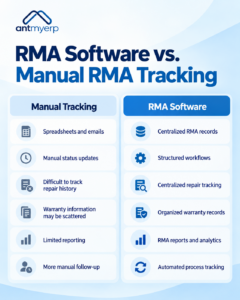
RMA Software vs. Manual RMA Tracking
Manual RMA tracking can become difficult as equipment and service requests increase. Spreadsheets and emails make it harder to track repair history, warranty details, and RMA status.
RMA software keeps these records in one place, supports structured workflows, and makes repair, warranty, reporting, and status tracking easier. It also reduces manual follow-ups and improves visibility.
How to Choose the Best RMA Software
Choosing the Best RMA software for an oil and gas business requires more than checking the number of features.Consider the following factors:
Scalability
The system should support growing numbers of customers, assets, equipment, returns, and service records.
Integration
Look for integration with systems such as ERP, inventory management, CRM, and other service applications. An ERP RMA workflow can help connect return activities with other business processes.
Equipment and Asset Tracking
The software should allow teams to connect RMAs with equipment, serial numbers, locations, and service history.
Customization
Every business can have different return and repair processes. The system should support workflows and fields that match the company’s requirements.
Ease of Use
Employees should be able to create, update, and track RMAs without extensive training.
Reporting
Look for reporting features that help managers understand repair volumes, warranty activity, turnaround times, and recurring equipment issues.
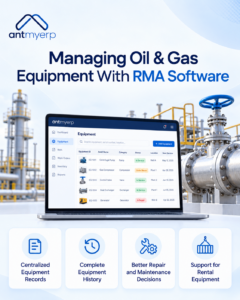
How RMA Software Supports Oil & Gas Equipment Management
Oil and gas businesses need to manage equipment throughout its lifecycle. Returns and repairs are only one part of this process.
When RMA information is connected with equipment, asset, inventory, and maintenance records, teams can gain a more complete view of equipment performance.
For example, an equipment record can show its location, warranty status, previous repairs, returned components, and maintenance history. This information can help service teams make better decisions about repair, replacement, and maintenance.
For businesses that also rent or lease equipment, rental operations add another layer of equipment tracking, availability, and maintenance requirements. In such cases, Features & Benefits: Oil and Gas Rental Management Software can provide additional insights into managing rental equipment.
Final Thoughts
Managing returns, repairs, warranties, and equipment records can become challenging when information is spread across different systems.
RMA software provides a structured way to manage these processes. For oil and gas businesses, it can support return management, repair tracking, warranty management, equipment tracking, asset visibility, and preventive maintenance.
The right solution should also integrate with existing business systems and adapt to the company’s operational requirements.
If your business needs a centralized way to manage equipment returns, repairs, and warranties, explore how AntMyERP can support your RMA process.