
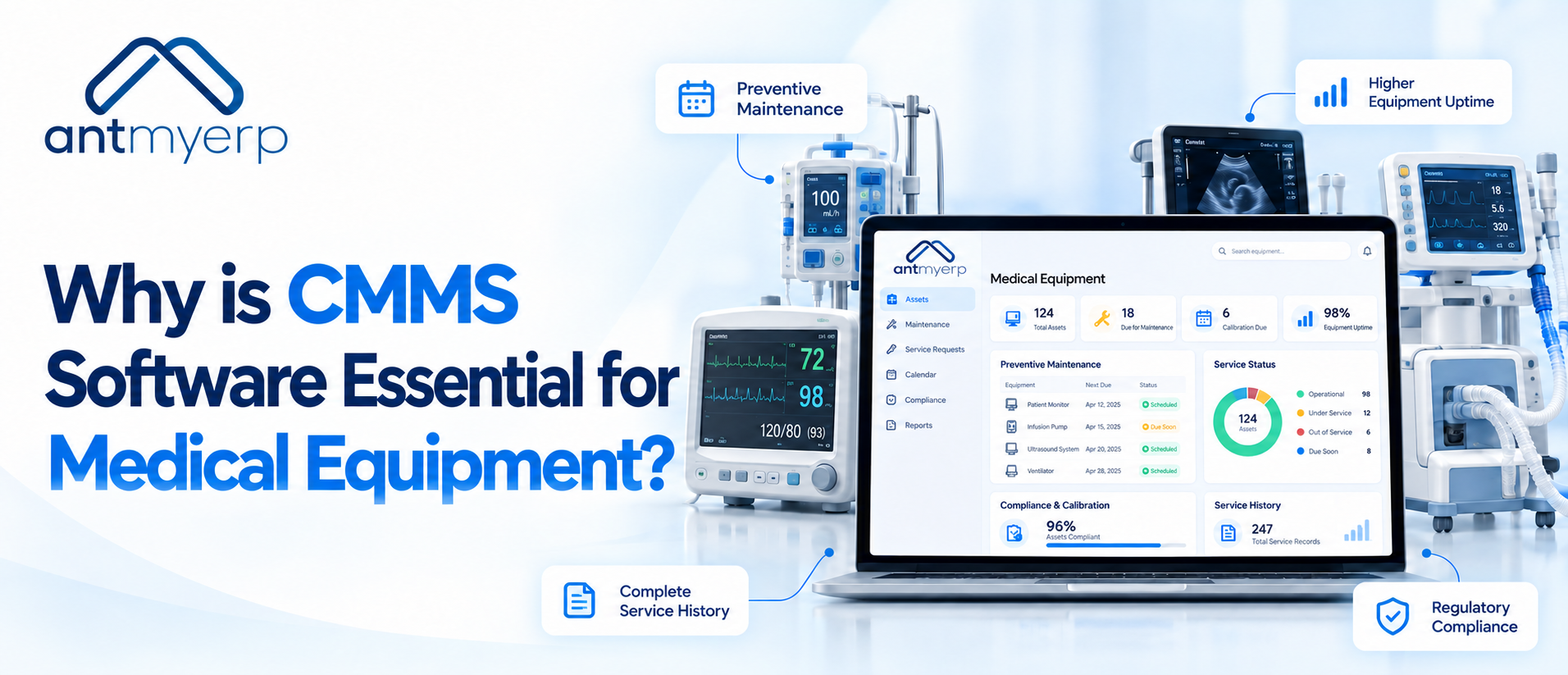
Why is CMMS Software Essential for Medical Equipment?
2026-10-10
CMMS medical software helps healthcare teams manage medical equipment maintenance, preventive maintenance schedules, service records, work orders, and equipment tracking from one system. It can help reduce equipment downtime, improve maintenance visibility, support regulatory compliance, and keep critical equipment available when needed.
A hospital may have hundreds of medical devices across different departments. Each device needs regular inspection, servicing, and preventive maintenance.
Now imagine several infusion pumps are due for maintenance, but the reminder is in a spreadsheet. One task gets missed, the last service date is difficult to find, and the technician has to check multiple records before starting the work.
These small gaps can make medical equipment maintenance difficult to manage, especially when the number of devices increases.
CMMS medical software can help healthcare teams manage these tasks in one place. It can help schedule preventive maintenance, track equipment history, manage work orders, and keep maintenance records organized.
What Is CMMS Medical Software?
CMMS medical software is a computerized maintenance management system that helps healthcare organizations manage equipment maintenance and related activities.
A CMMS can keep important equipment information in one place, including asset details, maintenance history, service records, work orders, and preventive maintenance schedules.
For healthcare teams, having this information in one system makes it easier to keep track of medical equipment, plan maintenance, and address service needs before they turn into bigger problems.
For businesses that service, rent, or manage AMC contracts for medical equipment, Medical Equipment Service Software can also help manage service activities along with equipment maintenance.
What Happens When Medical Equipment Maintenance Is Missed?
Missing one maintenance task may seem minor, but repeated delays can create bigger problems for healthcare facilities.
Depending on the equipment and situation, missed maintenance can contribute to:
- Unexpected equipment downtime
- Delayed repairs
- Missed preventive maintenance
- Difficulty finding service history
- Higher workload for maintenance teams
- Incomplete maintenance records
- Greater difficulty supporting regulatory compliance
A structured maintenance process helps teams see what is due, what is overdue, and what has already been completed.
Why Is CMMS Software Important for Medical Equipment?
Medical equipment often requires regular maintenance, inspection, calibration, and servicing. Missing a scheduled maintenance task can increase the risk of equipment failure and unexpected downtime. A CMMS for healthcare helps maintenance teams organize these activities through planned schedules and digital records.
Here are some of the main ways it can support medical equipment maintenance.
1. Helps Schedule Preventive Maintenance
Preventive maintenance for medical equipment is important because equipment should be inspected and serviced at the right intervals.
With CMMS software for healthcare, teams can create recurring maintenance schedules for different types of equipment. The system can help maintenance staff track upcoming tasks instead of relying only on spreadsheets, paper records, or manual reminders.
AntMyERP’s Preventive Maintenance Software helps businesses schedule and track preventive maintenance tasks, create maintenance tickets, assign technicians, and keep maintenance data organized.
2. Keeps Medical Equipment Records Organized
Healthcare facilities can have hundreds or thousands of equipment assets. Each asset may have its own maintenance requirements and service history.
A CMMS for medical equipment can store important information such as:
- Equipment name and identification number
- Location and department
- Maintenance schedule
- Service history
- Repair records
- Inspection details
- Assigned technicians
- Maintenance status
Having these records in one system makes medical equipment management easier for maintenance teams.
3. Tracks Equipment Maintenance History
Knowing what happened to an asset in the past can help technicians make better maintenance decisions.
Biomedical equipment maintenance often involves repeated inspections, repairs, replacements, and servicing. A CMMS can maintain a digital history of these activities.
Technicians can review previous work orders and maintenance records before starting a new task. This gives teams better visibility into recurring problems and equipment performance.
4. Reduces Equipment Downtime
Unexpected equipment downtime can create problems for healthcare teams, particularly when the equipment is important for patient care.
CMMS for hospitals can help teams identify upcoming maintenance tasks and manage repair requests more efficiently.
By keeping preventive maintenance schedules and service information organized, teams can address maintenance needs before some issues lead to unexpected failures.
5. Makes Work Order Management Easier
Maintenance teams need a clear way to receive, assign, and close equipment maintenance requests.
A CMMS can help create work orders for inspections, repairs, preventive maintenance, and other service activities.
Each work order can include information such as the equipment involved, maintenance task, assigned technician, priority, status, and completion details.
This gives maintenance teams a clearer view of open and completed work.
6. Supports Biomedical Equipment Maintenance
Biomedical equipment requires careful maintenance because it is used in clinical environments.
Biomedical CMMS software can help teams organize maintenance activities for different biomedical assets and maintain service records for each item.
Instead of keeping information across separate spreadsheets or paper files, teams can use a centralized system to track equipment maintenance and related tasks.If you are specifically evaluating software for biomedical assets, you can also explore our guide to Top Biomedical Equipment Maintenance Software.
7. Improves Medical Equipment Tracking
Medical equipment can move between rooms, departments, and facilities. Without accurate records, it can become difficult to know where an asset is located or when it was last serviced.
Medical equipment tracking through CMMS can provide better visibility into asset locations and maintenance status.
For example, a technician can check an equipment record to see its location, maintenance history, upcoming service requirement, and previous work orders.
This can help teams find the right information faster when service or inspection is required.
8. Helps Maintain Accurate Maintenance Records
Maintenance records are important for understanding equipment history and demonstrating that required maintenance activities have been completed.
A CMMS can keep records of completed inspections, repairs, preventive maintenance tasks, and service activities.
Digital records also make it easier for teams to find information when they need to review an asset’s maintenance history. For more information on connecting asset information with preventive maintenance, see our guide on Integrating Asset Management Systems with Preventive Maintenance.
9. Supports Regulatory Compliance
Healthcare organizations often need to follow maintenance, inspection, safety, and documentation requirements.
A CMMS does not automatically make an organization compliant, but it can help teams maintain better records and monitor scheduled maintenance activities.
By keeping maintenance history, inspection records, work orders, and equipment information organized, the system can support documentation needed for regulatory compliance.
10. Helps Identify Recurring Equipment Problems
Some equipment problems happen repeatedly. When maintenance information is stored in one system, teams can review service history and identify patterns.
For example, repeated repair work on the same equipment may indicate that the asset needs additional attention, replacement parts, or replacement altogether.
This information can help healthcare organizations make more informed maintenance and asset management decisions.
From Equipment Alert to Completed Maintenance
A well-organized maintenance process should make it clear what needs to happen at every stage. A typical CMMS workflow can look like this:
- Equipment due for maintenance
- Maintenance alert
- Work order created
- Technician assigned
- Inspection or repair completed
- Parts and service details recorded
- Work order closed
- Maintenance history updated
This creates a traceable record for each piece of equipment.
Instead of simply marking a task as complete, the maintenance team can keep information about what was checked, what work was performed, and when the equipment was serviced.
CMMS Is More Than a Maintenance Calendar
A CMMS is not simply a digital calendar for maintenance reminders.It connects equipment information, maintenance schedules, work orders, technicians, service history, and reports in one system.
For healthcare organizations, this creates a clearer view of what equipment needs attention, what maintenance has already been completed, and where recurring problems are occurring.
This broader view can be particularly useful when maintenance teams are responsible for equipment across multiple departments or facilities.
CMMS for Healthcare vs. Manual Maintenance Tracking
Manual maintenance tracking can work when the number of assets is small. However, it becomes harder to manage as a healthcare facility grows.
Spreadsheets, emails, paper records, and separate files can make it difficult to get a complete view of equipment maintenance.
With CMMS for healthcare, teams can manage equipment records, preventive maintenance, work orders, and service history in a more structured system.
The main difference is visibility. Instead of searching through different records, maintenance teams can access relevant information from a centralized system.
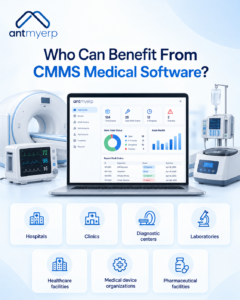
Who Can Benefit From CMMS Medical Software?
CMMS medical software can be useful for organizations that manage a large number of medical or biomedical assets, including:
- Hospitals
- Clinics
- Diagnostic centers
- Laboratories
- Healthcare facilities
- Medical device organizations
- Pharmaceutical facilities
The exact maintenance requirements will vary depending on the equipment, facility, and applicable regulations.
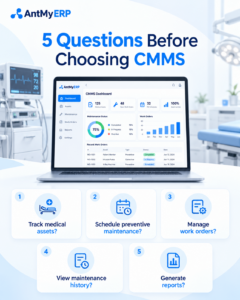
5 Questions to Ask Before Choosing CMMS for Healthcare
Before selecting a CMMS, healthcare organizations should look at how well the software fits their existing maintenance process.
Ask these questions:
1. Can it track every medical asset?
The system should make it easy to maintain equipment information, location, status, and maintenance history.
2. Can it schedule recurring preventive maintenance?
The software should support recurring maintenance schedules so teams can plan inspections and servicing in advance.
3. Can technicians access work orders easily?
Technicians should be able to see assigned maintenance tasks and update work orders without unnecessary steps.
4. Can we view complete maintenance history?
A complete service history can help technicians understand previous repairs, inspections, and recurring equipment issues.
5. Can it generate useful maintenance reports?
Reports can help managers review completed work, overdue tasks, equipment performance, and maintenance activity.
What Should Healthcare Teams Look for in CMMS Software?
When evaluating CMMS software for healthcare, organizations should consider whether the system can support their maintenance workflow. Important capabilities may include:
- Preventive maintenance scheduling
- Medical equipment tracking
- Work order management
- Maintenance history
- Equipment records
- Technician assignment
- Service reminders
- Maintenance reporting
- Asset management
- Mobile access for technicians
The right system should fit the organization’s equipment maintenance process rather than adding unnecessary complexity.
Healthcare teams can also use a Medical Equipment Preventive Maintenance Checklist to make sure important maintenance tasks are covered.
Final Thoughts
Medical equipment needs regular maintenance, accurate records, and timely servicing to remain reliable. Managing these activities manually can become difficult as the number of assets increases.
CMMS medical software gives healthcare maintenance teams a structured way to manage preventive maintenance, equipment tracking, work orders, service history, and maintenance records.
For hospitals and healthcare facilities, a well-managed CMMS can improve maintenance visibility, help reduce equipment downtime, and support better healthcare asset management.
If your organization manages multiple medical assets, a CMMS can provide a more organized way to manage equipment maintenance from one place.