
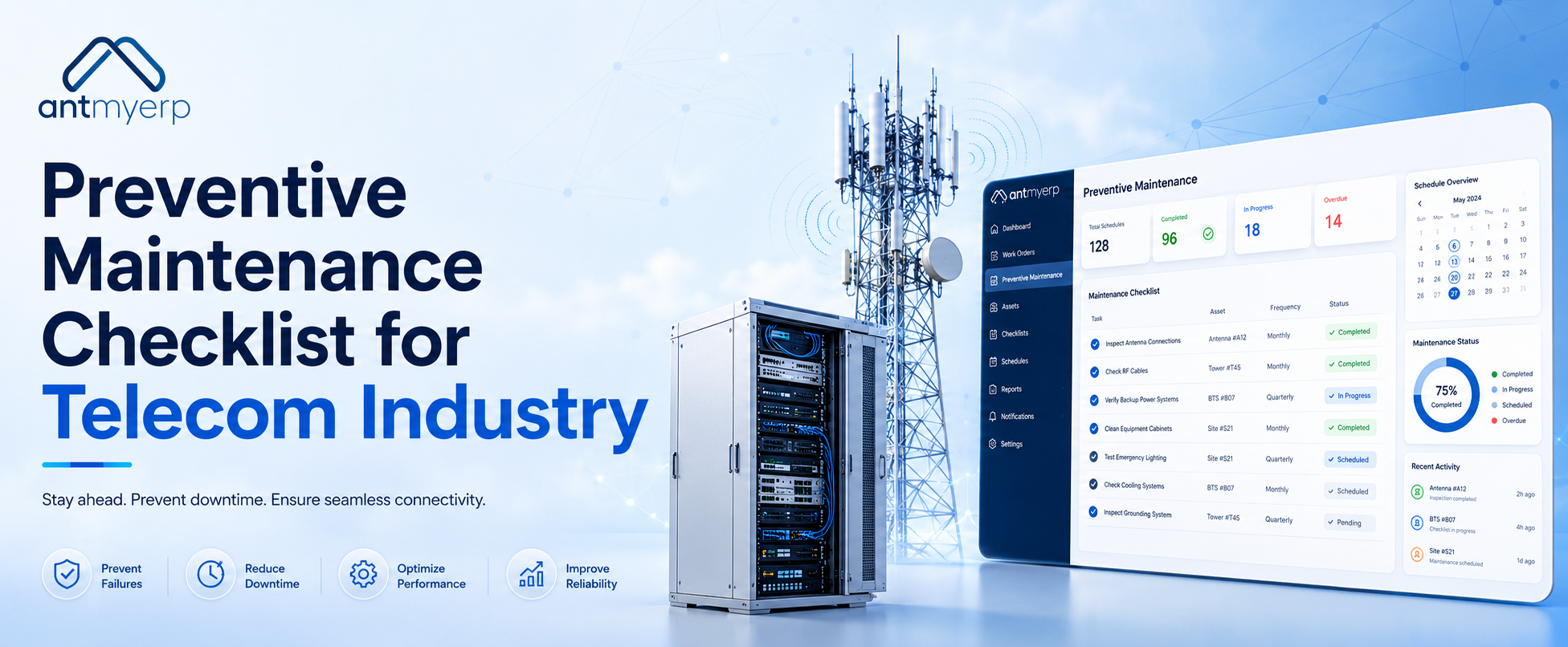
Preventive Maintenance Checklist for Telecom Industry
2026-08-13
A telecom preventive maintenance checklist should cover power and batteries, network equipment, cables and physical infrastructure, software and firmware, network security, monitoring and alerts, backup systems, spare parts, documentation, and compliance. A maintenance management system can help automate schedules, assign tasks, track technicians, manage parts, and maintain service history.
Preventive maintenance in the Telecom industry is the regular inspection, testing, servicing, and updating of telecom equipment before a failure causes network downtime.
A preventive maintenance checklist for the telecom industry helps teams systematically maintain network equipment, power systems, physical infrastructure, software, security systems, and backup resources.
Instead of waiting for a router, battery, cable, antenna, or network component to fail, telecom teams can use scheduled maintenance to identify early warning signs and fix issues before they become service disruptions.A preventive maintenance checklist for the telecom industry should cover more than equipment inspection.
What Is Preventive Maintenance in Telecom?
Preventive maintenance in telecom is a planned approach to inspecting and servicing network infrastructure before equipment failure occurs.
It can include activities such as:
- Inspecting routers, switches, antennas, and other network equipment
- Testing UPS systems, batteries, and backup power
- Checking cables, connectors, grounding, and physical infrastructure
- Updating firmware and software
- Reviewing network performance and device health
- Checking security configurations
- Testing backup and redundancy systems
- Replacing worn or aging components
- Recording maintenance activities and equipment history
The goal is simple to identify potential problems early and keep telecom services reliable.
Why Is Preventive Maintenance Important in Telecom?
Telecom networks depend on multiple connected components. A problem with power, cabling, hardware, software, or connectivity can affect service availability.
A structured maintenance program helps telecom companies:
Reduce Network Downtime
Regular inspections can identify equipment degradation, weak batteries, damaged cables, overheating, and other issues before they cause service interruptions.
Extend Equipment Life
Cleaning, inspection, configuration checks, and timely replacement of worn components can help telecom equipment operate reliably for longer.
Improve Network Reliability
Scheduled maintenance gives technicians a consistent process for checking critical infrastructure instead of relying only on reactive repairs.
Control Maintenance Costs
Planned maintenance can reduce the operational impact of unexpected equipment failures and emergency service visits.
Improve Technician Productivity
A centralized maintenance schedule gives technicians clear information about what needs to be checked, where it is located, and when the task is due.
Maintain Better Service Visibility
Maintenance records create a history of inspections, faults, repairs, replaced parts, and technician activity. This helps managers identify recurring problems and make better maintenance decisions.
What Are the Different Types of Maintenance in Telecom?
Telecom companies may use several maintenance approaches depending on the equipment, network requirements, and type of problem.
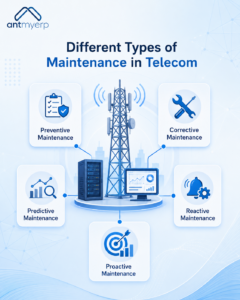
Preventive Maintenance
Scheduled inspections and servicing performed before equipment fails. For Example, Testing backup batteries every month and replacing batteries that show signs of degradation.
Corrective Maintenance
Repairing equipment after a fault has been identified.For instance, Replacing a damaged network cable after a connectivity problem is detected.
Predictive Maintenance
Using equipment data, monitoring, and analytics to identify conditions that may indicate an upcoming failure.For example, Monitoring temperature, power consumption, or equipment performance to identify abnormal behavior.
Proactive Maintenance
Addressing the underlying causes of recurring failures rather than repeatedly repairing the same problem. Investigating repeated equipment overheating and improving ventilation instead of only replacing failed components.
Reactive Maintenance
Responding after an unexpected failure occurs.Sending a technician to restore service after a network device suddenly stops working.
In practice, telecom companies often combine these approaches. Preventive maintenance provides the planned foundation, while corrective, predictive, and proactive maintenance help teams respond to different types of equipment and network issues.
Preventive Maintenance Checklist for Telecom Industry
A useful telecom maintenance checklist should cover more than equipment inspection. It should include the entire service environment, from power and physical infrastructure to software, security, spare parts, and documentation.
1. Battery and Power Systems Checklist
Power problems can affect multiple network components, making backup power an important part of telecom maintenance.
Check:
- UPS systems and battery condition
- Battery voltage and backup capacity
- Battery terminals and connections
- Backup generators where applicable
- Power distribution equipment
- Surge protection systems
- Signs of overheating or battery leakage
- Power alarms and notifications
- Replacement dates for aging batteries
2. Network Equipment Checklist
Inspect critical network equipment according to the manufacturer’s recommendations and your organization’s maintenance schedule.Document any abnormal readings or recurring equipment faults for further investigation.
Check:
- Routers
- Switches
- Modems
- Network controllers
- Antennas and related equipment
- Equipment temperature
- Device status and alarms
- Network interfaces
- Error logs
- Unusual performance changes
3. Physical Infrastructure Checklist
Physical infrastructure can deteriorate over time due to environmental conditions, installation issues, or normal wear.Repair or replace damaged components before they become a source of network failure.
Inspect:
- Cables
- Connectors
- Grounding systems
- Racks and cabinets
- Mounting equipment
- Antennas
- Outdoor enclosures
- Signs of corrosion
- Water or moisture damage
- Loose connections
- Physical damage
4. Cable Management Checklist
Poor cable management can make maintenance more difficult and increase the risk of physical damage.Good cable documentation also reduces the time technicians spend identifying connections during repairs.
Check that cables are:
- Properly labeled
- Organized by connection or function
- Free from excessive bends and kinks
- Properly secured
- Protected from moisture, dust, and pests
- Easy for technicians to identify during service work
5. Software and Firmware Maintenance Checklist
Telecom equipment depends on software and firmware for reliable operation.Before applying major updates, confirm compatibility and maintain a rollback or recovery plan where required.
Review:
- Firmware versions
- Operating system updates
- Security patches
- Device configurations
- Software compatibility
- Configuration backups
- System logs
- Known software issues
6. Network Security Checklist
Preventive maintenance should also include security checks.Security maintenance should be documented so teams can track what was checked, when it was checked, and what action was taken.
Review:
- Firewall configurations
- User access permissions
- Password and authentication controls
- Security alerts
- Network vulnerabilities
- IDS/IPS configurations where applicable
- Remote access permissions
- Security patches
- Unusual login or device activity
7. Remote Monitoring and Alerts Checklist
Continuous monitoring can help maintenance teams identify problems between scheduled inspections.Configure alerts for conditions that require technician attention so teams can investigate issues before they become major service problems.
Monitor:
- Device availability
- Network performance
- Equipment temperature
- Power conditions
- Connectivity
- Error rates
- Device alarms
- Capacity or utilization thresholds
8. Backup and Redundancy Checklist
Telecom networks often depend on backup resources to maintain service during equipment or power failures.Periodically test backup and failover processes rather than assuming they will work when an outage occurs.
Check:
- Backup power systems
- Redundant network links
- Backup equipment
- Failover configurations
- Disaster recovery procedures
- Configuration backups
- Recovery procedures
9. Spare Parts and Inventory Checklist
Maintenance teams need access to the right parts when equipment requires replacement.Linking spare parts to maintenance tasks helps technicians know which components are available before starting a repair.
Track:
- Batteries
- Cables
- Connectors
- Network hardware
- Replacement modules
- Fuses and other consumables
- Critical spare equipment
- Minimum stock levels
- Part usage
- Reorder requirements
10. Vendor and SLA Checklist
Telecom companies may depend on equipment manufacturers, service providers, contractors, and other vendors.Keeping this information organized helps maintenance teams respond faster when vendor support is required.
Review:
- Vendor contracts
- Service-level agreements
- Warranty information
- Support contacts
- Equipment replacement timelines
- Repair turnaround times
- Escalation procedures
- Contract renewal dates
11. Documentation and Compliance Checklist
Every maintenance activity should leave a clear record.
Document:
- Equipment inspected
- Date and time of maintenance
- Technician responsible
- Inspection results
- Faults identified
- Parts replaced
- Corrective actions
- Follow-up requirements
- Maintenance history
- Compliance-related checks
A complete maintenance history can also help managers identify recurring equipment problems and plan future maintenance.
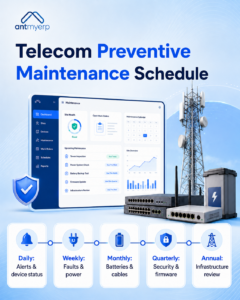
Telecom Preventive Maintenance Schedule
The frequency of maintenance depends on the equipment, operating environment, manufacturer recommendations, and network criticality.A simple telecom preventive maintenance schedule can be organized by frequency.
- Daily maintenance includes reviewing network alerts, device status, and critical alarms.
- Weekly maintenance focuses on recurring faults, power status, monitoring alerts, and overall equipment health.
- Monthly maintenance includes inspecting batteries, cables, hardware, backup systems, and maintenance records.
- Quarterly maintenance covers firmware updates, security settings, redundancy, equipment performance, and spare inventory.
- Annual maintenance involves comprehensive infrastructure inspections, reviewing the maintenance strategy, and assessing aging equipment for repair, replacement, or upgrade.
This schedule should be customized based on the telecom company’s network architecture and equipment requirements.A preventive maintenance checklist for the telecom industry should be linked to a maintenance schedule so technicians know when each task is due.
How Do Telecom Companies Manage Preventive Maintenance?
Managing preventive maintenance manually becomes difficult when a telecom company has multiple sites, technicians, assets, contracts, spare parts, and recurring maintenance tasks.
Common problems include:
- Missed maintenance schedules
- Spreadsheet-based tracking
- Delayed technician assignments
- Poor visibility into equipment history
- Difficulty tracking spare parts
- Manual follow-ups
- Incomplete service records
- Limited visibility across multiple locations
A maintenance management system can bring these activities into one workflow.Instead of maintaining separate spreadsheets for equipment, technicians, parts, and schedules, teams can connect these activities and track the complete maintenance process.Using software to manage a preventive maintenance checklist for telecom industry can help teams schedule recurring tasks and track completion.
How Can AntMyERP Help with Telecom Preventive Maintenance?
Preventive Maintenance Software can help telecom service teams organize recurring maintenance activities from a centralized system.
Key capabilities include:
- Automated maintenance scheduling: Create recurring preventive maintenance schedules based on defined intervals.
- Technician task assignment: Assign maintenance jobs to technicians and provide task details on mobile devices.
- Maintenance history: Maintain records of inspections, service activities, faults, and repairs.
- Spare parts tracking: Track parts used during maintenance and monitor inventory availability.
- Contract management: Manage customer contracts and recurring service commitments.
- Service visibility: Give managers a centralized view of maintenance activities and job status.
- Reduced manual coordination: Replace scattered spreadsheets, calls, and manual follow-ups with a structured workflow.
For telecom companies managing multiple assets and recurring service activities, this can make preventive maintenance easier to schedule, execute, and monitor.
Make Telecom Preventive Maintenance More Manageable
A telecom preventive maintenance program is most effective when maintenance tasks, technicians, equipment, spare parts, contracts, and service history are connected.
A structured preventive maintenance checklist for the telecom industry gives technicians a consistent process to follow, while maintenance software can help managers automate recurring schedules and monitor execution.
With the right process and tools, telecom companies can move from reactive repairs toward more planned and reliable maintenance operations.
Ready to simplify preventive maintenance?