
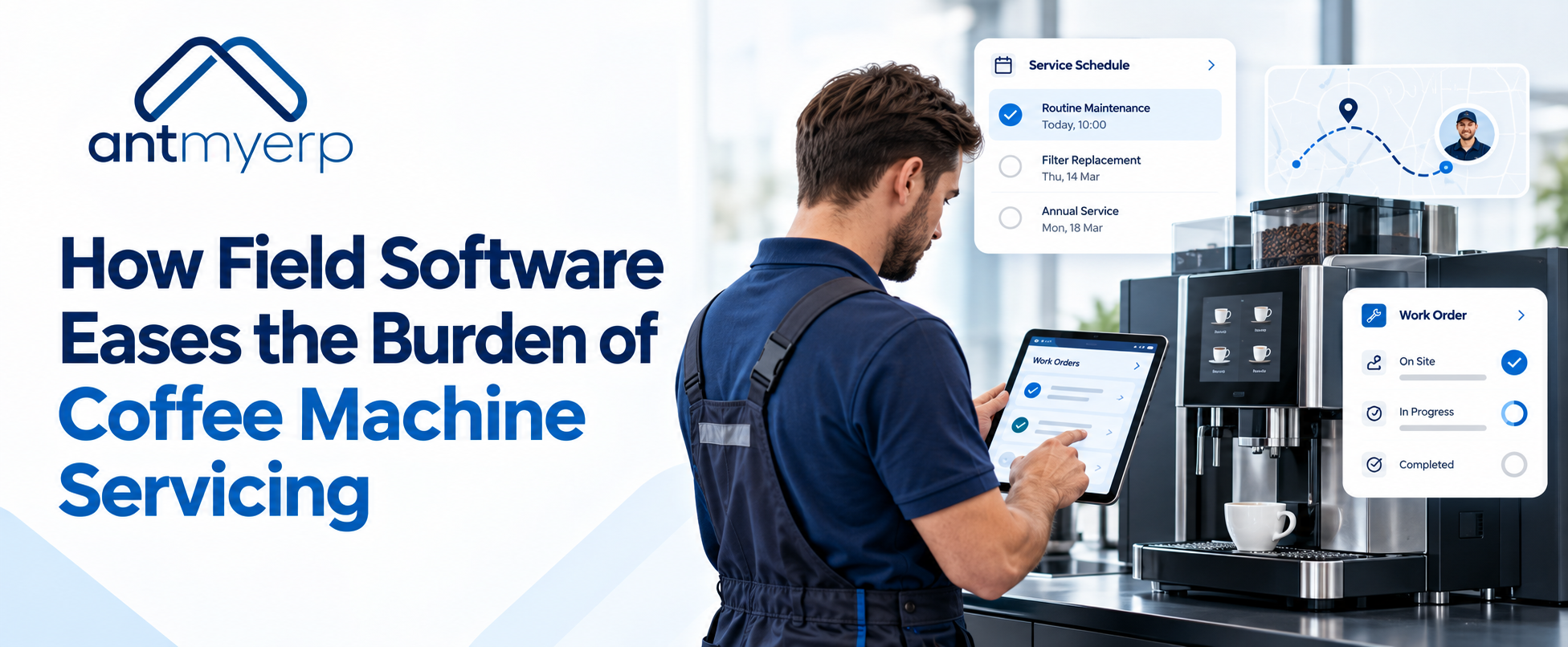
How Field Software Eases the Burden of Coffee Machine Servicing
2026-10-05
Coffee vending machines need timely maintenance, skilled technicians, and the right spare parts. Field service software for coffee vending machines connects scheduling, service requests, inventory, and machine history in one place, helping reduce delays and downtime.
Coffee vending machines are expected to work when customers need them. A machine that suddenly stops dispensing coffee, develops a recurring fault, or remains unattended after a service request can quickly become a customer-service problem.
For businesses managing coffee vending machines, servicing involves much more than sending a technician after a breakdown. Teams need to manage service requests, technician scheduling, machine history, spare parts, preventive maintenance, customer communication, and follow-ups.
When these activities are handled through spreadsheets, phone calls, messages, and separate records, keeping track of every service job becomes difficult.
This is where field service software for coffee vending machines can help. It connects service requests, technicians, scheduling, inventory, machine records, and field updates in one system.
Why Coffee Vending Machine Servicing Can Become Difficult
Imagine a coffee vending machine at a busy office stops working during the morning. The customer reports the problem. The service coordinator checks for an available technician, assigns the job, and informs the technician about the issue.
The technician reaches the location but discovers that the required spare part is not available.
Now another visit has to be scheduled. The customer has to wait, the machine remains unavailable, and the service team spends additional time coordinating the repair.
This type of situation can become more difficult when a business manages hundreds of machines across different locations.
Coffee Vending Machine Breakdowns
Coffee vending machines contain several components that require regular inspection and maintenance. Problems such as clogging, worn components, dispensing issues, electrical faults, or cleaning-related problems can affect machine performance.
A delayed response can increase downtime and affect the customer’s experience.
Preventive maintenance can help businesses identify potential issues before they turn into unexpected service requests.
Manual Technician Scheduling
Scheduling becomes challenging when several service requests arrive from different locations.
A coordinator may need to consider:
- Technician availability
- Location
- Skills and experience
- Existing assignments
- Job priority
- Expected service duration
- Required spare parts
Managing all these factors manually can take considerable time.
Field service software for coffee vending machines can give service managers a centralized view of jobs and technician availability, making it easier to organize assignments.
Spare-Part Availability
A technician may reach a customer’s location only to find that the required part is unavailable.
This can result in a repeat visit and longer machine downtime.
With vending machine inventory management, service teams can maintain records of available parts and update inventory when components are used during repairs.
Limited Access to Service History
Every coffee vending machine can have a different maintenance history.
One machine may have recurring dispensing problems, while another may frequently require a particular component.
Without centralized records, technicians may have to depend on paperwork, phone calls, or information from another employee.
Service history gives technicians useful information before they start working on a machine.
Communication Gaps
Customers want to know what is happening after they raise a service request.
They may want to know whether a technician has been assigned, when the technician will arrive, and whether the repair has been completed.
At the same time, technicians need accurate information about the machine and the reported problem.
A connected service system can reduce the communication gap between customers, technicians, and service teams.
How Field Service Software for Coffee Vending Machines Helps
A connected service workflow can make it easier to manage a request from the moment it is reported until the job is completed.
Instead of moving between multiple spreadsheets, messages, and records, teams can manage important service activities from one system.
1. Schedule Technicians More Efficiently
Field service software for coffee vending machines can help service teams assign technicians based on availability, location, skills, and workload. For example, when a technician is already working near another customer’s location, the dispatcher can consider that technician for the next suitable service request. This can help reduce unnecessary travel and make technician scheduling more organized.
2. Give Technicians Mobile Access
Technicians work away from the office, so they need access to relevant information while they are in the field.
A field service app can provide access to:
- Assigned service requests
- Customer details
- Machine information
- Previous service history
- Job instructions
- Spare-part information
- Service status
Technicians can also update job progress from their mobile devices.This means the office team can see the latest job status without having to call the technician repeatedly.
3. Manage Spare Parts
Inventory and field service are closely connected. Before a technician visits a machine, the service team should have an idea of what parts may be required and whether those parts are available.Field service software for coffee vending machines can connect service activities with inventory records.
Teams can track:
- Available spare parts
- Parts used during service
- Low-stock items
- Inventory movement
- Parts associated with service jobs
This can help technicians arrive better prepared for the job.
4. Maintain Machine Service History
A completed service job should become part of the machine’s service record.
A centralized service history can include:
- Previous complaints
- Repairs completed
- Parts replaced
- Preventive maintenance
- Technician remarks
- Service dates
- Recurring issues
When the same machine develops another problem, technicians can review its previous records before starting the repair.
5. Manage Service Requests
A vending machine servicing software solution can help teams create, assign, monitor, and close service requests from one place.A request can move through stages such as:
- New
- Assigned
- In Progress
- Completed
- Closed
This gives managers a clearer view of pending and completed jobs.It can also help identify service requests that have remained open for too long.
6. Improve Customer Communication
Customers do not always expect every repair to be completed immediately, but they do expect clear communication.When technicians update job status through a field service app, service teams have access to the latest information.
This can make it easier to communicate service progress and provide customers with more accurate updates.
Before and After field service software for coffee vending machines
When coffee vending machine servicing is managed manually, service requests, technician schedules, spare parts, and machine history can become difficult to track. This may lead to delays, repeat visits, and longer downtime.
With field service software for coffee vending machines, these activities are connected in one system. Teams can manage service requests, schedule technicians, track job status, access machine history, and prepare spare parts more efficiently.
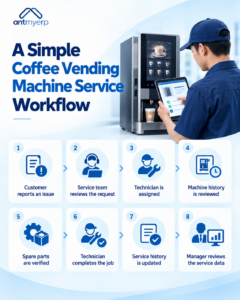
A Simple Coffee Vending Machine Service Workflow
A typical service process can follow these steps:
- Customer reports an issue
A service request is created for the coffee vending machine. - Service team reviews the request
The coordinator checks the location, priority, technician availability, and job requirements. - Technician is assigned
The technician receives the service request through the field service app. - Machine history is reviewed
Previous complaints, repairs, and maintenance records can be checked. - Spare parts are verified
The service team can check whether the required components are available. - Technician completes the job
The technician records the work performed and parts used. - Service history is updated
The completed activity becomes part of the machine’s service record. - Manager reviews the service data
Reports can help managers monitor workload, recurring problems, completion time, and other service metrics.
This creates a connected workflow from service request to completed job.
What to Look for in Coffee Vending Machine Service Software
Businesses have different service requirements, but several capabilities can be useful when evaluating a solution.
Service Request Management
Create, assign, prioritize, and track service requests from one place.
Technician Scheduling and Dispatch
Assign technicians according to availability, location, skills, and workload.
Mobile Field Service App
Give technicians access to jobs, machine information, service history, and updates while they are in the field. A mobile field service app allows technicians to access assigned jobs, customer details, machine history, service instructions, and updates while working on-site. For more information, see our guide on Best Field Service App in Vending Machine Service.
Inventory and Spare-Part Management
Track spare parts and connect inventory information with service activities.
Preventive Maintenance
Schedule recurring maintenance activities and monitor their completion.
Machine Service History
Maintain records of repairs, maintenance activities, parts replaced, and technician remarks.
Service Analytics
Monitor metrics such as open service requests, completion time, repeat visits, technician workload, and first-time fix rate.
Use Service Data to Improve Operations
Field service software does more than help teams manage today’s service requests. Over time, service data can show patterns that may otherwise be difficult to identify.
Managers can analyze:
- Machines with frequent breakdowns
- Frequently replaced components
- Repeat service requests
- Technician workload
- Average service completion time
- Preventive maintenance compliance
- Open versus completed jobs
- First-time fix performance
These insights can help businesses identify areas where preventive maintenance, inventory planning, technician training, or process improvements may be required.
Why Choose AntMyERP for Coffee Vending Machine Service Management?
AntMyERP’s field service capabilities help businesses manage service operations through a connected workflow.
Businesses can manage areas such as:
- Service requests and complaints
- Technician assignment
- Scheduling and dispatch
- Customer and machine information
- Service history
- Preventive maintenance
- Inventory and spare parts
- Mobile field operations
- Service reporting
For coffee vending machine businesses managing equipment across multiple customer locations, having these activities connected can make service operations easier to monitor.
Instead of treating scheduling, servicing, inventory, and machine records as separate activities, teams can manage them as part of one service process.
A Practical Example of Field service software for coffee vending machines
Consider a business managing coffee vending machines across multiple office locations.
One machine stops dispensing coffee.
Without connected field service software
The customer calls the service team.
The coordinator searches for an available technician.
The technician receives the job details over the phone.
The technician reaches the location but discovers that the required spare part is unavailable.
A second visit has to be scheduled.
With field service software for coffee vending machines
The service request is recorded.
The dispatcher checks technician availability and location.
The technician can review the machine’s service history.
Inventory records help the team check spare-part availability.
The technician receives the job through the mobile app.
After completing the repair, the technician records the work performed and parts used.
The machine’s service history is updated.
The manager can review the completed job through service reports.
The software does not replace the technician. It gives the technician better information and a more organized process to work with.
Future of Coffee Vending Machine Servicing
Field service is moving beyond basic scheduling and reactive repairs.
Mobile applications, connected equipment, analytics, automation, and predictive maintenance can increasingly work together.
For coffee vending businesses, this can mean moving from:
“The machine has stopped working. Send a technician.”
to:
“The machine has shown recurring issues. Review its history and schedule maintenance.”
The exact technology required will depend on the equipment, service model, connectivity, and data available.
The broader goal is to use service information not only to fix machines but also to identify patterns and improve maintenance planning.
Conclusion
Coffee vending machine servicing involves much more than repairing a machine after it breaks down.
Service teams need to coordinate customers, technicians, schedules, machine history, spare parts, and follow-up activities. When these processes are managed manually, maintaining visibility becomes increasingly difficult as the service network grows.
Field service software for coffee vending machines can connect these activities and create a more organized service workflow.
From technician scheduling and service requests to inventory tracking and machine history, a centralized system can help coffee vending businesses manage their field operations more effectively.
Want to see how AntMyERP can support your vending machine service operations?