
Crane Maintenance and Repair: How to Prevent Crane Breakdowns and Reduce Downtime
2026-05-20
Crane breakdowns can slow down construction work. They can also cost more money for repairs and can be unsafe for workers. Regular crane maintenance and repair help companies avoid sudden problems, keep cranes safe to use, and make cranes last longer. A proper preventive maintenance process combined with AntMyERP’s Preventive Maintenance Software makes crane servicing much easier to manage.
One Small Crane Problem Can Create a Big Project Delay
Most crane breakdowns do not happen overnight. In many cases, the problem starts small, maybe a hydraulic leak, worn wire rope, or missed inspection. Teams are usually busy handling project deadlines, so these small warning signs often get ignored. Then one day, the crane suddenly stops working in the middle of operations.
Now the business has to deal with:
- Project delays
- Emergency repair costs
- Technician pressure
- Equipment downtime
- Safety concerns
This happens more often than people think in construction and industrial operations. A crane failure does not only affect the machine. It affects the entire workflow around it.
According to industry reports, construction equipment breakdowns can cause a “substantial impact on production schedules and crews” and lead to major project delays. Unplanned equipment downtime can reduce productivity significantly in construction projects. That is why companies are now focusing more on preventive maintenance instead of waiting for breakdowns to happen.
Why Crane Maintenance and Repair Matters
Many businesses still treat maintenance as something they only do after equipment fails.But regular crane maintenance and repair is actually about preventing failures before they become expensive problems.When inspections happen on time, small issues can be fixed early. This helps businesses avoid sudden crane breakdown repair situations later.
Regular crane inspection and maintenance helps companies:
- Reduce downtime
- Improve crane safety maintenance
- Increase equipment lifespan
- Avoid emergency repairs
- Keep projects running on schedule
Over time, preventive maintenance also reduces stress for technicians and operations teams because maintenance becomes more planned and organized.
Common Problems Crane Businesses Face
A lot of crane rental companies and construction businesses still manage maintenance using spreadsheets, phone calls, or paper notes. That system may work for a small number of cranes. But as operations grow, things become difficult to track.
Some common problems include:
- Missed maintenance schedules
- Delayed inspections
- Poor service history tracking
- Difficulty managing technicians
- Missing spare part records
- Repeated crane breakdown repair situations
Many teams only realize there is a problem after the crane stops working. That is why having a proper maintenance scheduling system is becoming important for crane businesses today.
Crane Maintenance Tips That Actually Help Reduce Breakdowns
Good crane maintenance is mostly about consistency.
Small inspections done regularly can prevent larger repair issues later.
Some practical crane maintenance tips include:
- Check hydraulic systems for oil leaks
- Inspect wire ropes for wear and corrosion
- Test brakes and crane controls regularly
- Inspect hooks for cracks or bending
- Lubricate moving parts properly
- Monitor tire and track conditions
- Follow proper crane inspection frequency
These checks may look simple, but they help businesses catch problems early before equipment downtime increases.
Crane Preventive Maintenance Checklist
A crane preventive maintenance checklist helps service and maintenance teams in staying organized.That way they can follow the same inspection process every time.
During routine inspections, teams should check:
- Hydraulic pressure and oil leaks (to avoid sudden failure)
- Wire rope condition (damaged ropes can cause accidents)
- Brake performance (for safe lifting)
- Electrical systems and controls (to prevent power faults)
- Hook condition (to ensure load safety)
- Lubrication points (to reduce wear and tear)
- Tire condition and alignment (for stable movement)
Using a machine maintenance checklist also improves communication between technicians because everyone follows the same maintenance process.As per Science Direct regular crane inspections help find problems early and reduce unexpected breakdowns. Crane companies follow daily, monthly, and yearly inspection schedules to keep cranes safe and in working condition.
Preventive Maintenance vs Emergency Repairs
Many companies delay crane maintenance to save money. But later, sudden crane repairs can cost much more. Small problems in the crane slowly become bigger when maintenance is skipped. One day, the crane may stop working suddenly and delay the project.
Companies that do regular crane maintenance usually face fewer breakdowns and smoother work. According to OSHA safety guidelines, regular crane inspections and preventive maintenance help identify problems early and improve workplace safety.
Preventive maintenance helps companies:
- Reduce unexpected downtime
- Improve maintenance planning
- Lower repair expenses
- Improve crane safety
- Extend equipment life
Most importantly, it helps projects continue without unnecessary interruptions.
How to Maintain a Crane Properly
Proper crane maintenance requires regular inspections, proper documentation, and planned servicing schedules.
Businesses should include:
- Daily visual inspections
- Weekly operational checks
- Monthly preventive maintenance
- Annual safety inspections for cranes
- Service record management
- Spare inventory tracking
Following a mobile crane maintenance schedule or overhead crane maintenance process improves overall equipment reliability.
Why Manual Crane Maintenance Tracking Creates Problems
As crane operations expand across multiple sites, manual maintenance tracking becomes difficult to manage.
Teams often struggle with:
- Missing service reminders
- Delayed technician assignments
- Incomplete maintenance records
- Difficulty tracking AMC contracts
- Poor visibility into repair history
This creates confusion during urgent repair situations.Many businesses eventually realize they need a centralized system to manage maintenance operations properly.
How AntMyERP Helps Crane Maintenance Teams
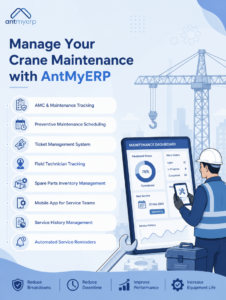
AntMyERP’Crane Rental Software helps crane rental companies, construction businesses, and industrial service providers manage maintenance activities from one place. Instead of tracking everything manually, teams can organize inspections, service requests, technicians, and maintenance schedules more efficiently.
The software helps businesses manage:
- AMC and maintenance tracking
- Preventive maintenance scheduling
- Service ticket management
- Technician tracking
- Spare inventory management
- Service history records
- Automated reminders
- Mobile access for field teams
This improves maintenance visibility and helps businesses reduce downtime caused by missed servicing activities.
You Can Also Explore:
The Future of Crane Maintenance
The crane maintenance industry is slowly moving toward smarter maintenance systems.Businesses are now using:
- Mobile inspection applications
- Real-time technician tracking
- Automated maintenance alerts
- Cloud-based maintenance scheduling systems
- IoT-based equipment monitoring
These technologies help companies improve maintenance planning and reduce unexpected equipment downtime.
A Simple Example of Crane Maintenance Management
A crane rental company was working at many construction sites. But they had a problem. Their maintenance work was often late, and they were not keeping proper service records.
Because of this, technicians were always busy fixing sudden breakdowns. They did not get time to do planned maintenance work.
Later, the company started using one simple preventive maintenance management software to manage all maintenance in one place. After this change, they could plan maintenance on time, reduce machine breakdowns, and keep all service records neat and organized.
The biggest improvement was visibility. The team finally knew:
- Which cranes needed servicing
- Which technicians were assigned
- Which spare parts were pending
- Which inspections were overdue
Small operational improvements made a big difference over time.
Conclusion
Many crane rental companies wait until a crane breaks down before taking action. This can cause work delays, higher repair costs, and safety problems.
Regular maintenance helps companies find small issues early. Simple inspections and planned servicing keep cranes working properly and help projects run without interruptions. When maintenance is done on time, cranes last longer and teams face fewer unexpected problems.
AntMyERP offers Preventive Maintenance Software that helps companies manage all crane maintenance work in a simple and organized way. Ready to Simplify Crane Maintenance Operations? Manage preventive maintenance, inspections, technicians, AMC contracts, and service history from one platform with Us.