
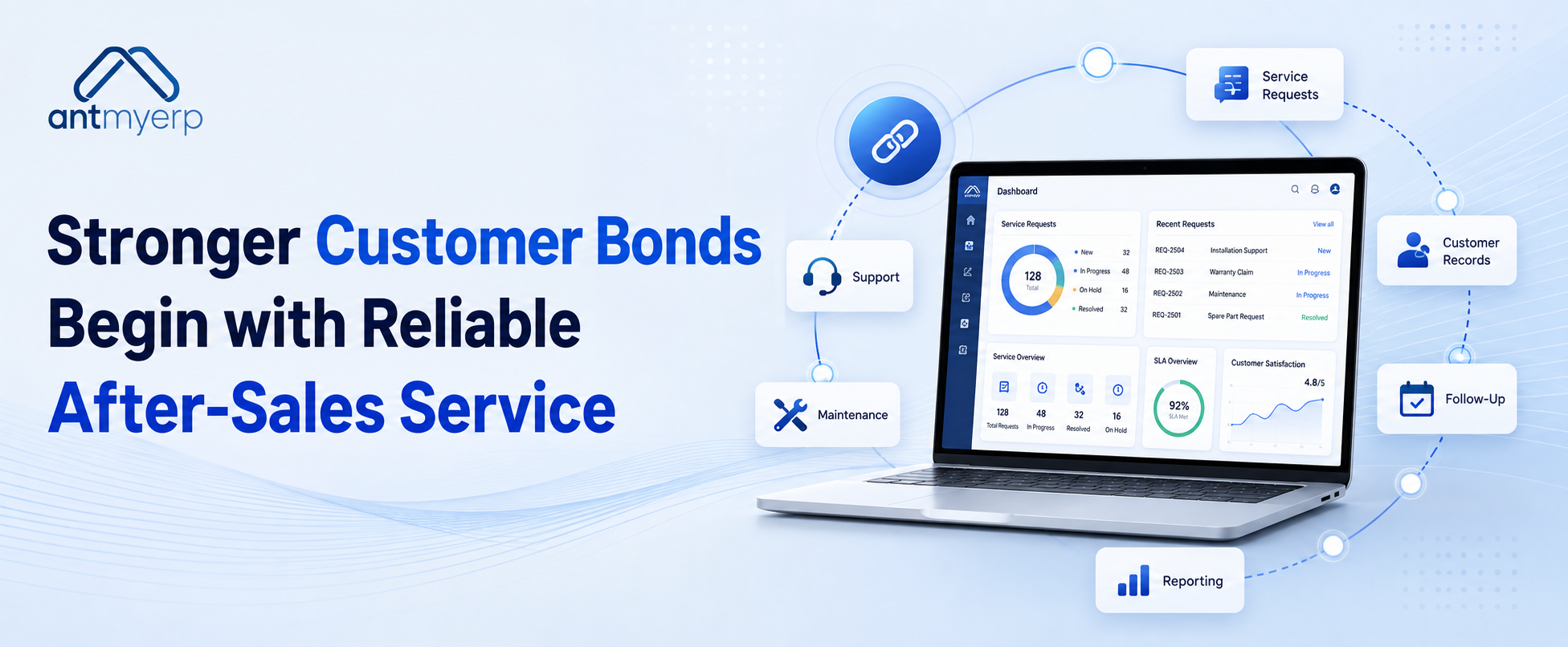
Stronger Customer Bonds Begin with Reliable After-Sales Service
2026-08-27
Reliable after-sales service helps businesses build customer trust, improve satisfaction, and encourage repeat business. After-sales service software makes this easier by helping teams manage service requests, technicians, maintenance schedules, service history, and follow-ups from one place. With better service tracking and faster responses, businesses can turn post-sale support into stronger, long-term customer relationships.
Winning a customer is only the beginning of a long business relationship. What happens after the sale often determines whether that customer returns, recommends your business, or looks elsewhere.
Customers expect more than a good product. They want quick support, timely maintenance, clear communication, and reliable solutions when something goes wrong.
For service-driven businesses, managing these expectations can become difficult as the customer base grows. Service requests increase, technicians handle multiple jobs, maintenance schedules become harder to track, and follow-ups can easily slip through the cracks.
After-sales service software can make everyday service operations easier to manage. It helps teams organize customer requests, service activities, technicians, maintenance, and follow-ups in a structured workflow.
Reliable after-sales service is not just about fixing problems. It is about showing customers that your business continues to support them after the purchase.
Why After-Sales Service Matters for Customer Loyalty
A customer may remember the product they purchased, but they are also likely to remember how your business responded when they needed help.A delayed response can create frustration. On the other hand, quick support and clear communication can strengthen trust.
Good after-sales service helps businesses:
- Build customer trust
- Improve customer satisfaction
- Encourage repeat business
- Reduce service delays
- Strengthen long-term relationships
Therefore, after-sales support should be treated as an important part of the customer experience rather than an activity that starts only when something breaks.
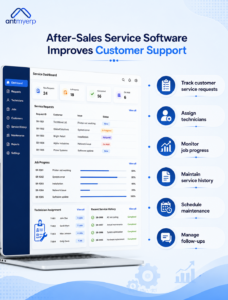
How After-Sales Service Software Improves Customer Support
Managing after-sales activities manually can become difficult when a business handles many customers and service requests.
Teams may use spreadsheets for customer records, emails for complaints, phone calls for technician updates, and separate documents for maintenance history. This makes it harder to get a complete view of each customer.
After-sales service software brings these activities into a more organized system.
It can help businesses:
- Track customer service requests
- Assign technicians
- Monitor job progress
- Maintain service history
- Schedule maintenance
- Manage follow-ups
With better visibility, service teams can respond to customers without spending unnecessary time searching for information.
Respond Faster to Customer Service Requests
Customers do not want to repeat their problem several times before getting help.When service requests are recorded and tracked properly, teams can quickly understand what the customer needs and what action is pending.
For example, a customer may report an equipment issue through a phone call. The service team can create a request, assign a technician, record the issue, and track the job until completion.This creates a clear service trail.
Moreover, managers can identify pending requests and take action before delays affect the customer experience.
Faster responses can make customers feel valued and supported.
Keep Technicians Better Organized
Technicians are often the face of a service business. Their communication, punctuality, and quality of work can directly influence customer satisfaction.However, technician coordination becomes challenging when teams depend on manual scheduling.
After-sales service software can help managers organize technician assignments and service schedules.
Key activities can include:
- Assigning service jobs
- Checking technician availability
- Tracking job status
- Recording service updates
- Managing follow-ups
This allows technicians to receive the information they need before visiting a customer.
As a result, field teams can spend less time waiting for instructions and more time completing service work.
Maintain a Complete Customer Service History
Imagine a customer contacts your support team about the same equipment that was serviced six months ago. Without proper records, the technician may have to start from the beginning.
A complete service history changes this.
Teams can review previous complaints, repairs, maintenance visits, replacement parts, and service activities before taking action.
This helps technicians understand the equipment better and avoid unnecessary troubleshooting.
It also makes customer communication more professional. Instead of asking customers to explain their entire history again, employees can review previous records and continue from where the last service ended.
That small improvement can make a big difference in customer experience.
Turn Follow-Ups into a Reliable Process
Missed follow-ups can damage customer trust.
A service team may promise to call back after checking an issue, send a maintenance reminder, or confirm a technician visit. When these tasks depend only on memory, some follow-ups may be missed.
Automation can make the process more reliable.
Service teams can create reminders for pending requests, scheduled visits, maintenance activities, contract renewals, and customer follow-ups.
This reduces the need for employees to remember every task manually.
More importantly, customers receive a more consistent experience because promised actions are easier to track.
Support Preventive Maintenance
After-sales service should not always begin with a breakdown.
Regular maintenance can help businesses stay connected with customers while keeping equipment in better working condition.
For businesses managing HVAC systems, medical devices, printers, CCTV equipment, generators, or other serviceable assets, preventive maintenance can become an important part of customer support.
With after-sales service software, teams can organize maintenance schedules and reminders.
You can also connect these activities with Preventive Maintenance Software to plan recurring maintenance more effectively.
This creates another opportunity to engage customers before they experience a major service problem.
Strengthen AMC and Recurring Service Relationships
Annual Maintenance Contracts can create long-term customer relationships. However, managing contract customers requires regular attention.
Teams need to track contract periods, scheduled visits, service requests, maintenance activities, and renewals.
An organized system can make these tasks easier to manage.
For businesses offering AMC services, AMC Management Software can help teams manage recurring maintenance activities and stay aware of upcoming service requirements.
Instead of contacting customers only when they raise an issue, businesses can maintain regular service touchpoints.
This can improve customer engagement and create opportunities for renewals.
Give Customers a More Consistent Experience
Customer experience should not depend on which employee answers the phone or which technician visits the site.
A centralized service process helps teams follow consistent workflows.
For example, when a service request is created, employees can follow a defined process from request registration to technician assignment, service completion, and follow-up.
This consistency can reduce communication gaps.
It also helps managers identify where service delays occur and improve the process over time.
For businesses with field teams, Field Service Management Software can further support technician coordination, job tracking, and field service operations.
Use Service Data to Improve Customer Relationships
Good service generates useful business data.
Managers can review information such as:
- Number of service requests
- Response times
- Repeat complaints
- Technician workloads
- Maintenance frequency
- Pending service jobs
These insights can reveal customer needs and operational problems.
For example, repeated complaints about the same equipment may indicate a product issue or the need for replacement. Frequent service requests may also show where preventive maintenance needs improvement.
Therefore, service data can help businesses make better decisions and improve the customer experience.
Make After-Sales Service a Competitive Advantage
Products can be compared on price, features, and availability. Service can be harder to copy.
A company that responds quickly, keeps accurate records, communicates clearly, and follows through on commitments can stand out from competitors.
Reliable after-sales service can also reduce customer frustration and increase confidence in the brand. In competitive markets, that confidence can become a valuable advantage.
Build Stronger Customer Bonds with Better Service
Customer relationships do not end when a sale is completed. They continue through every support request, maintenance visit, follow-up, and service interaction.
Businesses that make after-sales service reliable can create stronger customer experiences and encourage long-term relationships.
After-sales service software can help service teams organize requests, manage technicians, track service history, schedule maintenance, automate follow-ups, and improve operational visibility.
Final Thought
AntMyERP helps businesses manage service operations through connected workflows and centralized information. Explore AntMyERP Service Management to see how better service processes can support your customer relationships.
For businesses handling recurring service contracts, AMC Management Software can help organize maintenance and contract activities.
Strong customer bonds are built through consistent actions. Give customers a reason to trust your business long after the sale.